Last updated November 23, 2026
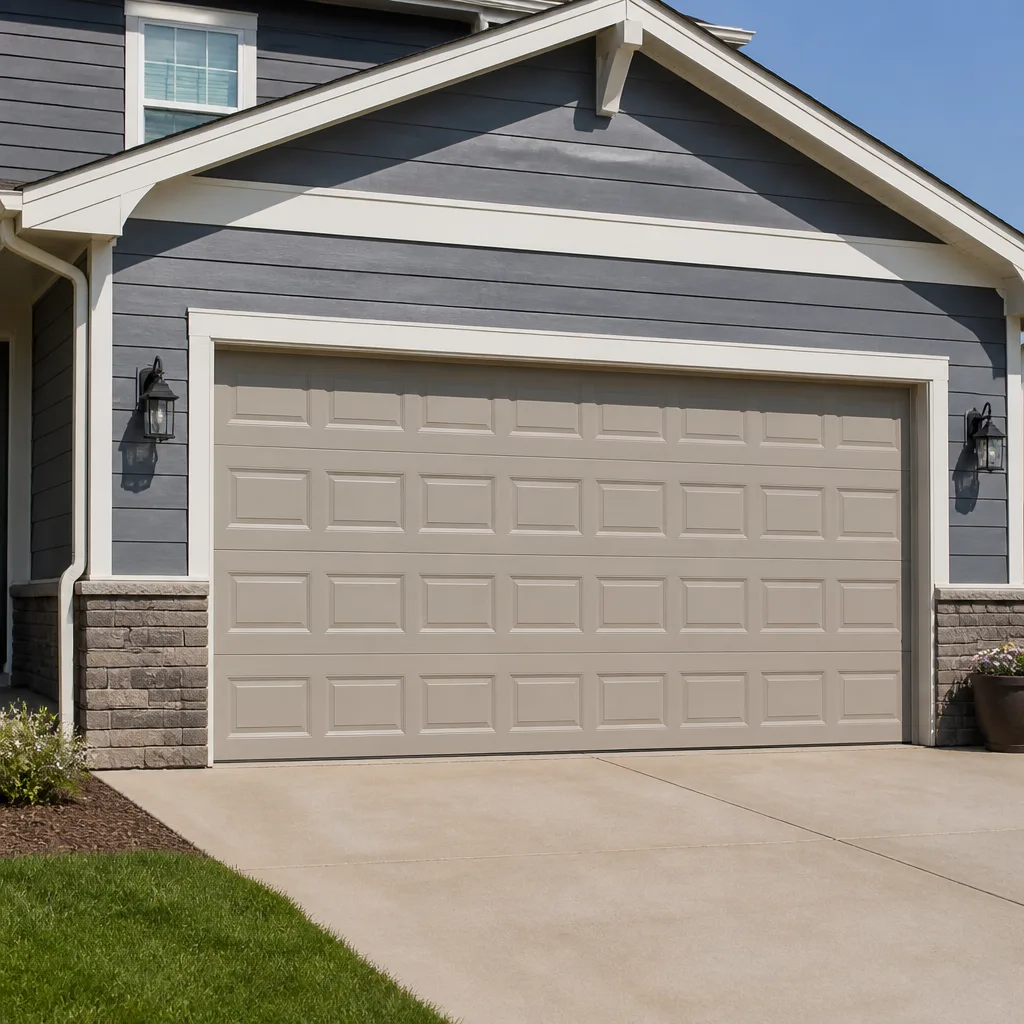 Raised-panel steel
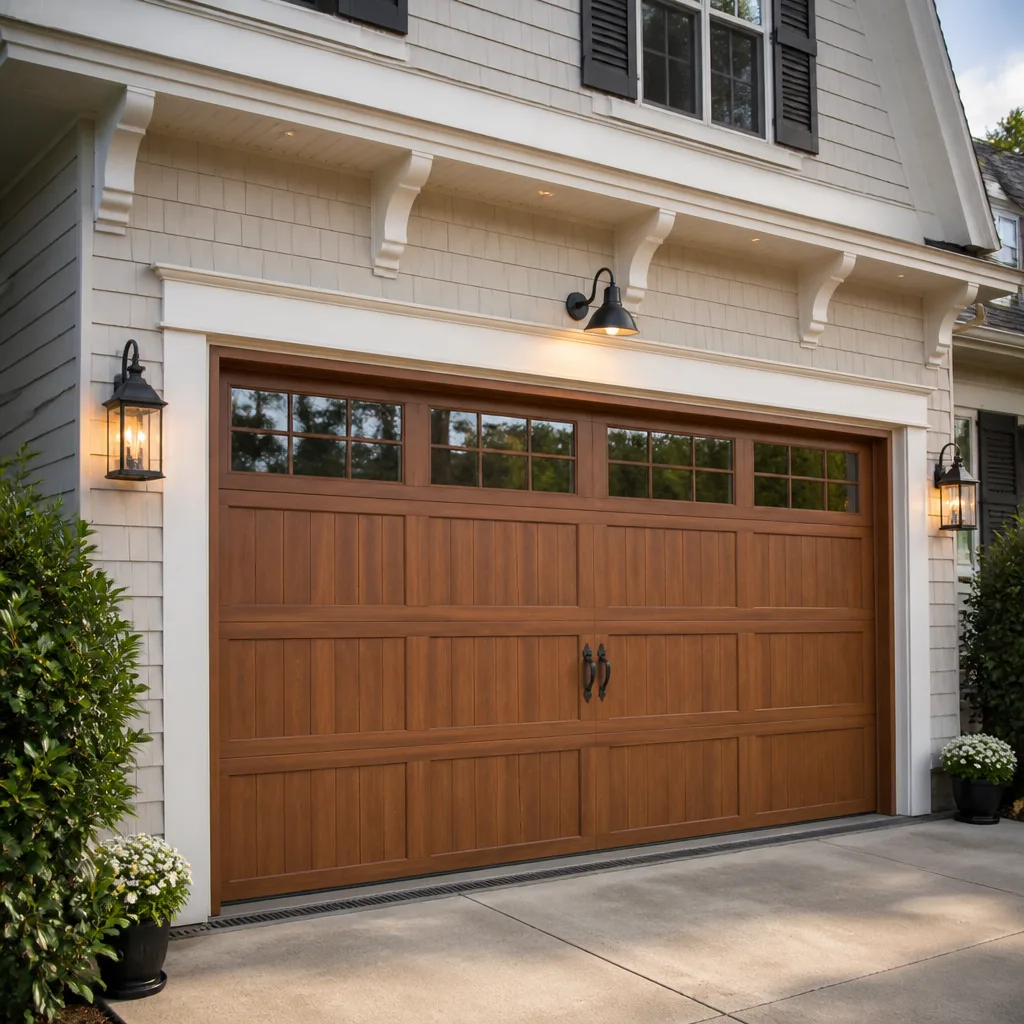
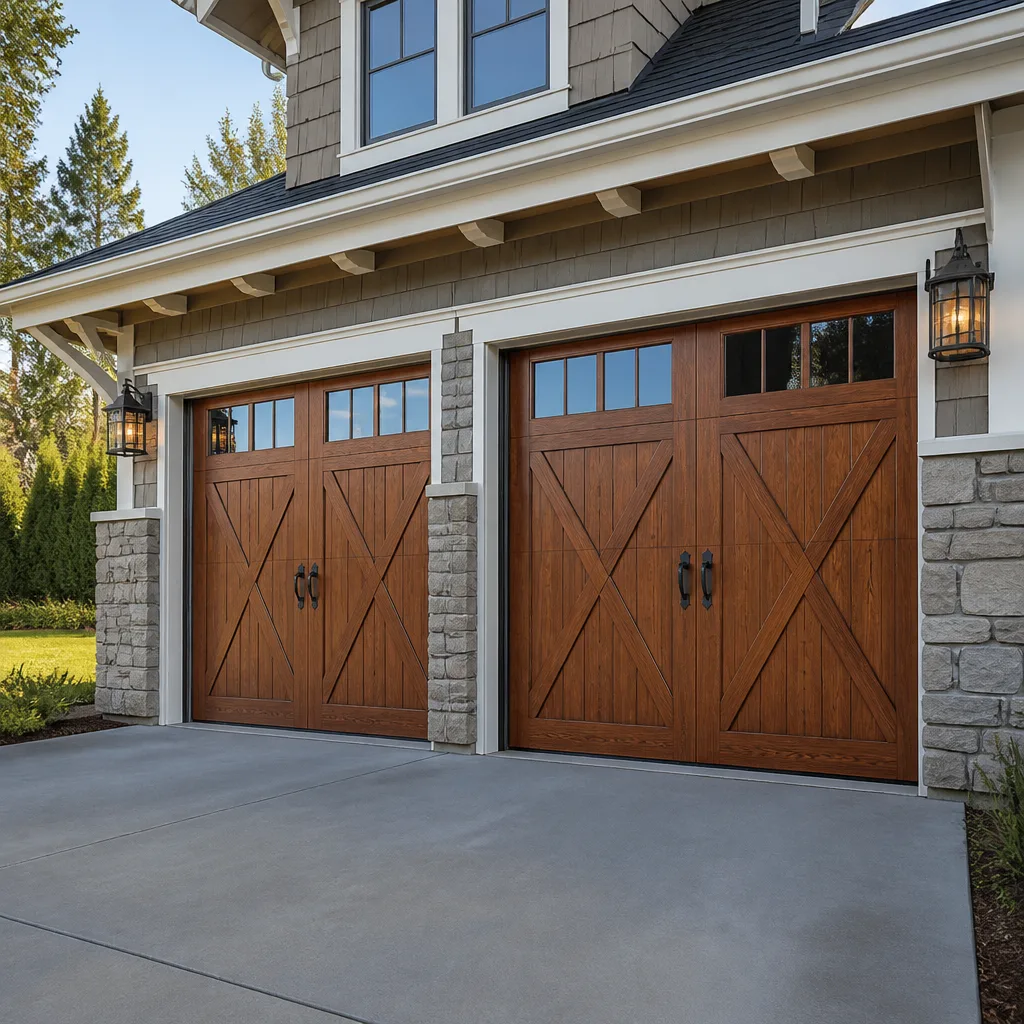 Carriage house
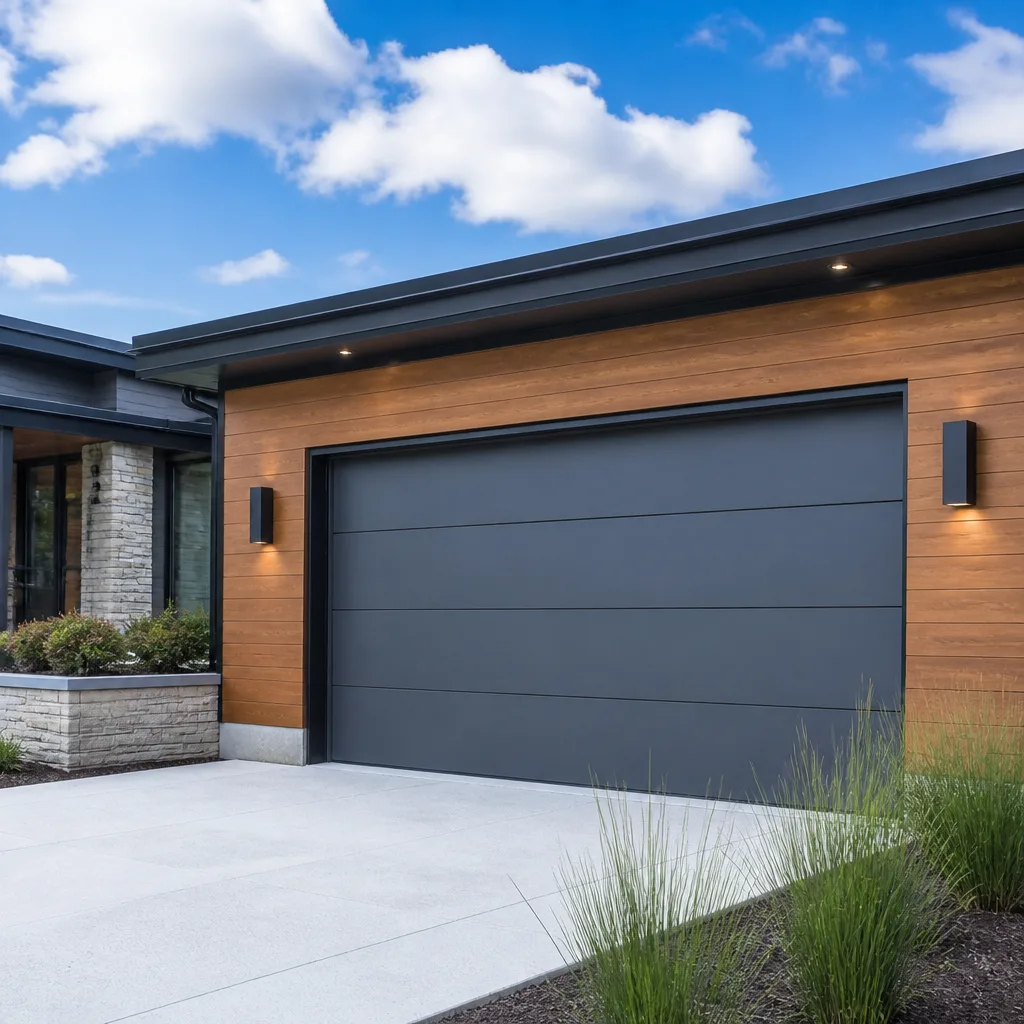 Modern flush
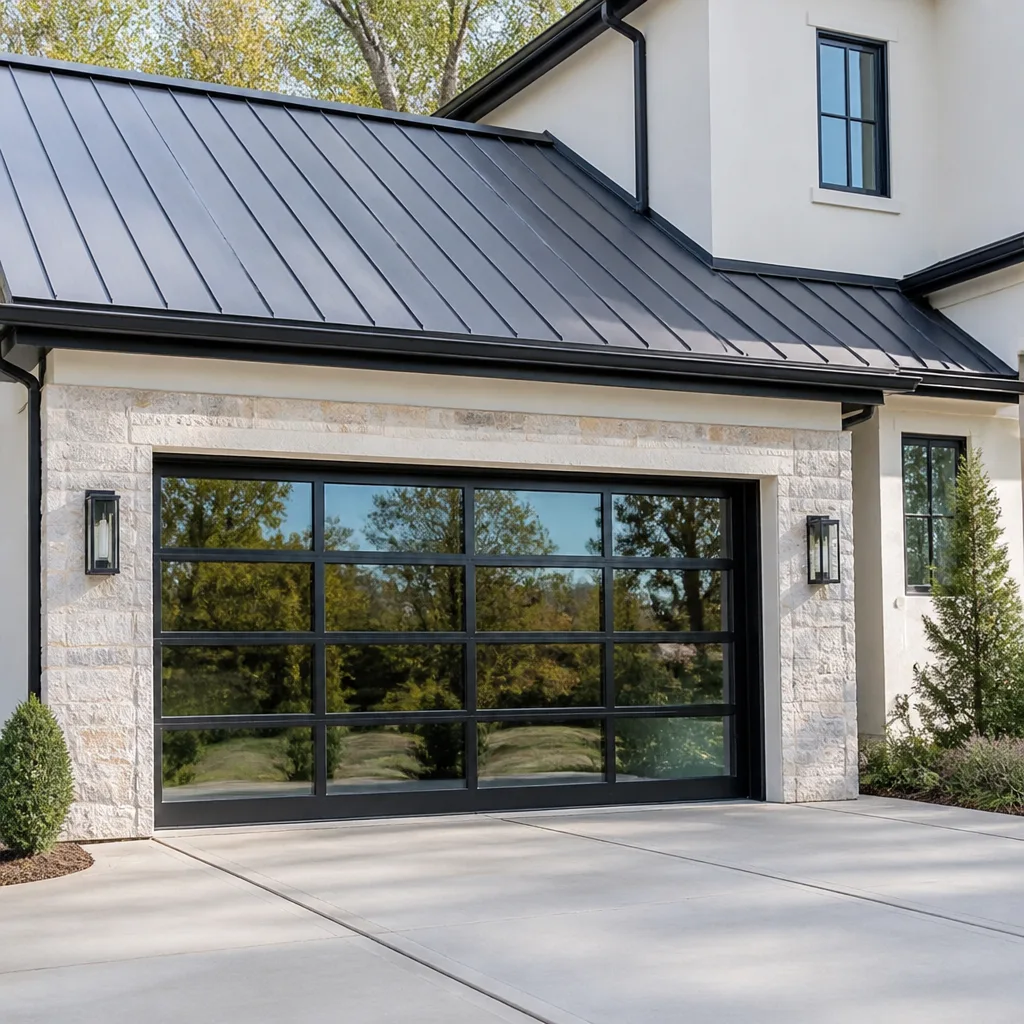 Full-view glass
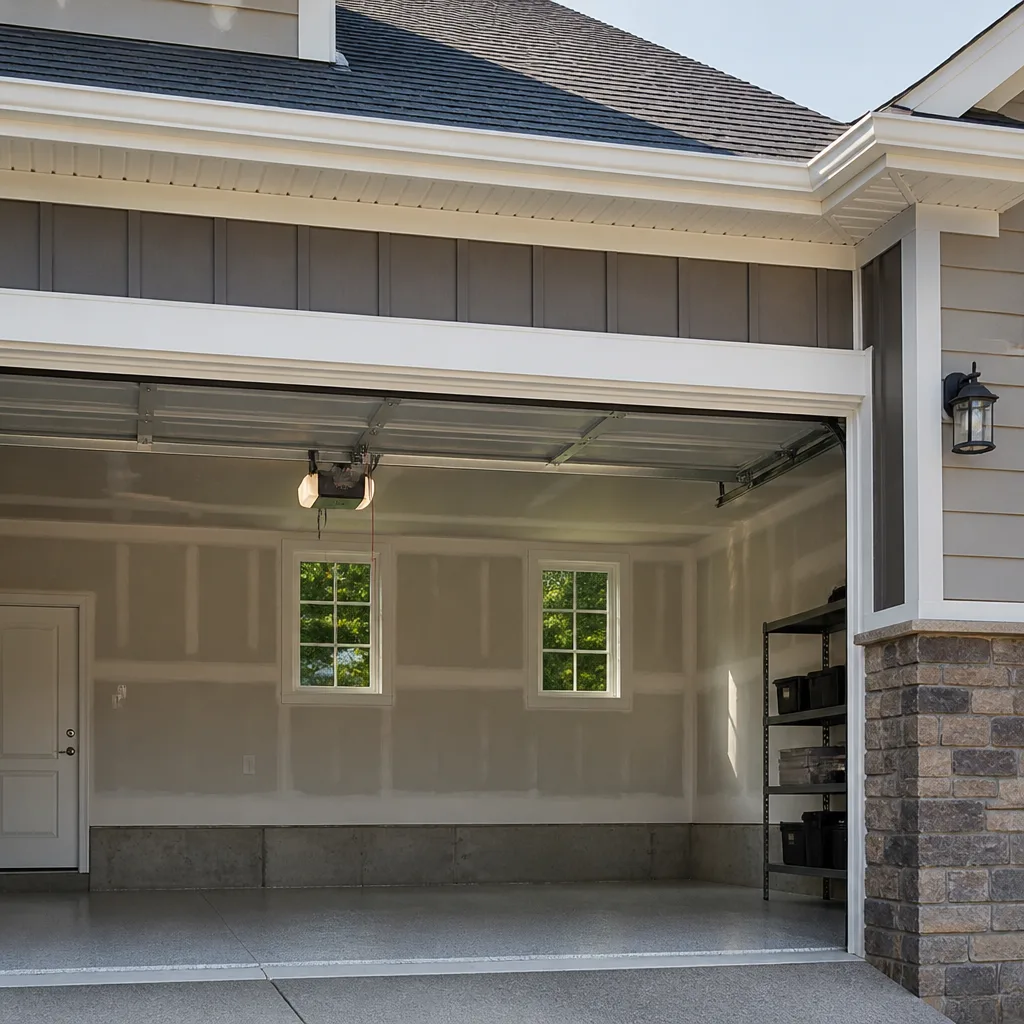 LiftMaster openers
 Chamberlain openers
Full 25-point door and opener safety check with every visit - springs, cables, rollers, tracks, and your LiftMaster or Chamberlain opener included
You get a price before we start. It does not change when the pro arrives.
Get your free estimateGarage Door Repair Maintenance Checklist for Cranberry Township Homeowners
A lubrication schedule copied from a Florida blog is useless in a Pennsylvania winter. The wrong grease on a torsion spring at 15°F doesn’t maintain it – it makes it brittle. Most checklists floating around the internet were written for a climate that isn’t yours, and they spend your time on parts that rarely fail here while skipping the ones that do. The checklist below is built the other way around: condition-based, tied to what Cranberry Township winters, mud season and 2000s-era housing stock actually do to a garage door. You’ll learn what to inspect, when the schedule should tighten, what you can safely handle, and the three jobs to leave alone.
Quick Answer
A good maintenance checklist for a Cranberry Township garage door is condition-based, not calendar-based. Check the torsion spring, cables, rollers, hinges, track and bottom seal after any stretch of hard freezes below 10°F, during mud season, and whenever the door sounds different or reverses unevenly. Lubricate metal-on-metal points twice a year, and call a technician for anything involving springs, cables or the torsion system.
Styles & brands we work with
- Raised-panel steel
- Carriage house
- Modern flush
- Full-view glass
- LiftMaster openers
- Chamberlain openers
Table of Contents
- Why Generic Checklists Fail in Cranberry Township
- Torsion Spring Inspection After a Hard Freeze
- The Hardware That Wears Out First on 2000s-Era Cranberry Township Tract Homes
- How to Test Auto-Reverse and Force Settings Correctly
- Weatherstripping and Bottom Seal: Mud Season Is the Real Test
- What You Can Safely Do Yourself and What Needs a Technician
- Opener Maintenance Checklist for Smart and Legacy Units
- A Seasonal Maintenance Rhythm Built for Western Pennsylvania
Why Generic Checklists Fail in Cranberry Township
Searches for “garage door maintenance checklist” return pages written for a national audience, and national advice has to stay vague to apply everywhere. That’s the problem. A checklist that says “lubricate twice a year” gives you no idea whether your door needs it in April or September, or whether the grease in your garage is the right type for temperatures that drop into the teens. It also can’t tell you that a bottom seal that works fine in a mild climate will let meltwater creep under the door during Cranberry Township’s mud season, when the ground is still saturated and the thaw runs for weeks.
Climate is the biggest reason a copied checklist misses. Western Pennsylvania swings between saturated spring ground, humid summers, and winters with repeated freeze-thaw cycles. Each of those stresses a different part of the door. Freeze-thaw cycles work metal and seals differently than steady cold. A spring that holds tension fine in a steady 25°F may lose it faster when the temperature bounces from 40°F to 8°F and back several times a month.
Housing age matters just as much. Cranberry Township grew fast in the 1990s and 2000s, which means a large share of homes here have garage doors that were installed in that era and are now well into the wear window for rollers, hinges, and opener components. A generic checklist written for a brand-new build or a 1960s home doesn’t account for that.
The result is a checklist that feels thorough but skips the failure points that actually bring homeowners here to call us. That’s what this guide corrects. For the full picture of what we handle, see Garage Door Repair Cranberry.
Key Takeaways
- Condition beats calendar: inspect after hard freezes, mud season, and any change in sound or movement.
- Freeze-thaw cycles are harder on torsion springs than steady cold.
- 2000s-era Cranberry Township homes have predictable wear points that generic lists skip.
- Auto-reverse testing requires a force check, not just an object under the door.
- Springs, cables and torsion hardware always need a technician, regardless of DIY confidence.
Torsion Spring Inspection After a Hard Freeze
Most standard spring inspection intervals assume steady weather. In Cranberry Township, tighten yours after any winter that produces more than three hard freezes below 10°F. A winter like that is a stress test: each hard freeze and thaw cycle flexes the steel in the spring, and repeated cycling shortens the useful life of a component that’s already under extreme tension every time the door moves. If your door has lived through a rough winter of deep cold snaps, don’t wait for the next calendar check. Look and listen now.
Springs are the part of the system that fails most often, and also the most dangerous when it does. Here’s what to look for without touching anything:
- A visible gap in a torsion spring. A snapped spring usually shows a clean break somewhere along its coil.
- An uneven door. If one side lifts before the other when you pull the opener, a spring may have lost tension.
- Loud bangs from the garage. A spring breaking sounds like a sharp crack or a bang – many homeowners hear it from inside the house.
- A door that won’t stay up. If the door drops unexpectedly when partially raised, stop using it.
- Visible surface rust or heavy flaking. Corrosion weakens the steel and shortens the life of the spring.
One detail worth knowing up front: when a mechanic replaces one spring, it’s usually best to replace the matched pair together, since both have cycled the same number of times and the second is close behind the first. A single-spring price and a pair price are different, so ask which one your written quote and estimate covers.
If any of the signs above turn up, treat it as a stop-use situation and bring in someone who does this work routinely. Our garage door spring repair is handled as core work, not an add-on, because springs under extreme tension are specialist territory – you can’t safely manage that energy with homeowner tools. Call (855) 658-4219 and we’ll get a technician out to evaluate it.
The Hardware That Wears Out First on 2000s-Era Cranberry Township Tract Homes
If you live in a home built in the late 1990s or 2000s in Cranberry Township, your garage door is likely somewhere between 15 and 30 years old. That’s the window where certain hardware components, made of rubber, plastic, or light steel, start to fail. Generic checklists don’t mention these because they assume a newer door or one from a different construction era.
These are the points that wear out first, in roughly the order you’ll notice them:
- Nylon or plastic rollers. Rollers that came with a builder-grade door are often plastic or thin nylon. They flatten, crack, and stop rolling smoothly. You’ll hear squealing or grating as the door moves. Replacing them with sealed bearing rollers is one of the simplest upgrades a 2000s-era door can get.
- Hinges and the pivot points around them. Screws loosen from years of vibration and the hinges wear at the knuckle. A door that rattles or groans means the hinges want attention.
- Opener drive gear and belt. Builders often installed the same opener across a whole development. The drive gear inside a Craftsman or Genie unit of that era wears out, and the belt or chain eventually stretches. If your opener is louder than it used to be, or the door hesitates before moving, the drive system deserves a look.
- Bottom seal and side weatherstripping. Original seals dry out and go brittle. See the mud season section below for why that matters here more than most places.
- Track alignment and the angle bracket. Settling foundations and hot summers can shift the vertical track slightly. A door that rubs on one side may need the track adjusted rather than replaced.
The other thing many Cranberry Township homeowners miss: when you eventually replace a door from this era, budget time for measuring and ordering. Replacement doors from Clopay or Amarr are built to order in specific sizes, so the process starts with a free measure and a written price, not a same-day swap. If you’re planning a replacement, our garage door repair team can tell you whether fixing the existing door makes more sense than replacing it.
How to Test Auto-Reverse and Force Settings Correctly
Every garage door opener has a safety reverse system. If the door meets resistance while closing, or if the photo-eye beam between the two sensors is broken, the door should reverse and go back up. Most checklists tell you to “put a board under the door” and consider it done. That tests the beam and the safety logic, but it doesn’t test the force calibration. The two are different systems, and a failing force test is the one most homeowners miss.
How to test the photo-eye safety beam
- Close the door and step back so the door is fully open.
- Locate the two small sensors mounted at the bottom of the vertical tracks – one sends an infrared beam, the other receives it.
- Wave an object (a broom handle or a piece of cardboard) across the beam while you press the close button. The door should reverse or refuse to close.
- If the door closes anyway, or if you don’t see a small indicator light on both sensors, the beam or wiring needs attention.
How to test the force setting
- With the door open, place a piece of 2×4 lumber flat on the floor in the middle of the doorway.
- Press close. The door should contact the wood and reverse before any real resistance builds.
- Do the same thing with the wood in the left third and the right third of the doorway, because a door that reverses in the center can still fail on one side.
- If the door pushes hard against the board before reversing, or stops instead of reversing, the force setting is too high.
What a failing result means: the opener’s force setting is calibrated too high, or the opener’s drive mechanism is worn, or the door itself is binding on its track and the opener is compensating with more power. A door that needs extra force to close is a door that could trap a person or a pet, so don’t ignore it. If a LiftMaster, Chamberlain, Genie or Craftsman opener fails the force test, garage door opener repair is the right call. These settings are adjusted on the opener itself, and getting them wrong can make the door less safe.
Test both systems twice a year, and again after any extended cold stretch in Cranberry Township. Cold stiffens grease and seals, which can make a borderline force setting fail outright.
Weatherstripping and Bottom Seal: Mud Season Is the Real Test
Most weatherstripping advice focuses on winter. In Cranberry Township, the harder test is mud season – the stretch in late winter and early spring when repeated freezes give way to thaws, and the ground stays wet for weeks. That’s when a failing bottom seal shows itself.
Here’s why. A dry, brittle bottom seal on a door that sits close to grade doesn’t seal evenly against the concrete pad. Meltwater runs under the door, and if your garage floor sits at or below the outside grade, that water finds the lowest point. You’ll see it as a wet strip along the door line, or as water pooling in a corner of the garage floor. The bottom seal is the first line of defense, and it’s also one of the cheapest things to replace.
What to inspect:
- The bottom seal for brittleness, tears, or a seal that no longer touches the floor evenly across the full width. Press it gently to see if it springs back or stays compressed.
- Side and top weatherstripping for gaps, especially where it meets the door frame. These gaps let in cold air and driving rain.
- The threshold or concrete pad for cracks or a low spot that lets water sit under the door.
- The door’s own fit – if you can see light or feel a draft around the perimeter, the seal needs address.
Seals are also a wind and pest barrier, not just a water one. A seal that’s gone a season too long lets in more than water. Replace bottom seals when they crack or lose their spring, and be proactive about the side weatherstripping before the first real thaw. If your door is a Clopay or Wayne Dalton model, the correct seal type and profile matter, and generic “one-size-fits-all” seal kits sometimes don’t fit the door you have.
What You Can Safely Do Yourself and What Needs a Technician
Here’s where a maintenance checklist earns its keep: telling you which tasks you can do with confidence and which should always be handled by a trained garage door technician. We’re not going to walk you through the dangerous stuff. But we will tell you where the line is.
Maintenance you can do safely
- Lubricating metal-on-metal points with a proper garage door or white lithium lubricant. Avoid heavy general-purpose grease in cold weather – it stiffens.
- Tightening loose hinge and bracket screws with a screwdriver or wrench, as long as the door is fully closed and supported.
- Cleaning the photo-eye sensors and testing the safety beam as described above.
- Inspecting the bottom seal, weatherstripping, rollers and track for visible damage. Inspect, don’t repair.
- Testing the force setting as described above, and calling for adjustment if it fails.
- Sweeping debris and salt from the bottom seal area and from the track, to keep grit out of the rollers.
Three tasks that require a technician regardless of DIY skill
- Spring work of any kind. Torsion springs hold enough stored energy to injure someone badly if released incorrectly. Adjusting tension, replacing a spring, or dealing with a snapped spring all fall to a trained technician. This isn’t a skill-level issue – it’s a physics issue.
- Cable, drum or track adjustment. The steel cables that pull the door up under tension are dangerous when released, and a misaligned track can twist and damage the door. Both require someone who knows what the tension should feel like.
- Opener force calibration when the test fails. Adjusting the force settings on an opener so the door closes correctly is a safety calibration, not a guess. Getting it wrong can cause the door to close on a person or a pet.
If you’re not sure whether a job is on the safe side of the line, that’s a good reason to ask. A short conversation with one of our technicians will tell you whether you can handle it or need a visit.
Opener Maintenance Checklist for Smart and Legacy Units
Your opener is often the first thing to signal a bigger problem. Modern smart openers and legacy units both benefit from a quick once-over alongside your door inspection. We work on the brands that are most installed in Cranberry Township homes, including LiftMaster, Chamberlain, Genie and Craftsman. Whatever model you have, the checklist is similar.
- Listen for changes. A louder motor, a slower start, or a door that hesitates before moving all point to a worn drive gear, belt or chain.
- Test the wall button and the remote. If one works and the other doesn’t, the problem is likely in the remote or receiver, not the motor.
- Check the photo-eye alignment light. A solid light on both sensors means the beam is aligned. A blinking or off light means it needs adjusting or the sensor needs cleaning.
- Test the manual release. Stand firmly and pull the red release handle while the door is closed. You should be able to lift the door by hand. If it’s very heavy, that points to a spring issue, not an opener issue.
- Check the safety reverse and force tests as described above.
- For smart openers (LiftMaster MyQ and similar), make sure the app still connects to the opener and that the battery in the keypad is fresh. If the door works from the wall button but not from the app, the problem is a network issue, not the door.
If your opener is failing and you’re in Cranberry Township, our team can diagnose it on-site rather than guessing. That’s especially useful with legacy units from the 2000s, where parts compatibility can be tricky.
A Seasonal Maintenance Rhythm Built for Western Pennsylvania
Rather than a rigid calendar, think in seasons. This is the rhythm that makes sense for a Cranberry Township home.
- Early spring (after thaw): Bottom seal and weatherstripping inspection, track clearing, roller check. This is mud season, so it’s the most important time to look at seals and how water behaves around the door.
- Late spring: Lubricate metal-on-metal points, check hinges and screws, run the force and photo-eye tests. Dust off the opener and check that remote and keypad batteries are fresh.
- Late fall (before hard freezes): Lubricate again, inspect the spring for rust or gaps, test the force settings because cold can change how the door operates, and check weatherstripping for gaps before the cold settles in.
- After any rough winter (below 10°F multiple times): Tighten up the spring inspection as described earlier. Don’t wait for spring.
A maintenance rhythm like this keeps most small problems from becoming big ones. It won’t prevent every failure – springs will still break and openers will still wear out – but it catches the ones that would have been cheap fixes if caught early.
Common Mistakes to Avoid
- Using heavy grease on springs. Grease that’s fine in summer turns stiff and works against the spring in winter cold. Use a proper lubricant for your climate and keep it light.
- Testing the auto-reverse only with an object in the center. The force tests need to happen at the left, center and right of the doorway. A door that reverses centrally can still crush a small object on one edge.
- Skipping the bottom seal during mud season. Water coming under the door is the most common seal failure in Cranberry Township, and it shows up right when the spring thaw begins.
- Adjusting force settings to “make it close.” A door that needs its force setting raised to close is a door with a binding problem. Fixing the force setting instead masks the real issue.
- Assuming 2000s-era hardware is fine because it still works. Original plastic rollers and hinges from that era are at or past their expected wear window. They work right up until they don’t.
- Ignoring a loosened angle bracket or hinge screw. A missing screw puts extra load on its neighbors. A quick tightening prevents a more expensive fix later.
- Trying to adjust a torsion spring yourself. This is the most common serious injury scenario in garage door work. Leave it alone.
See the difference
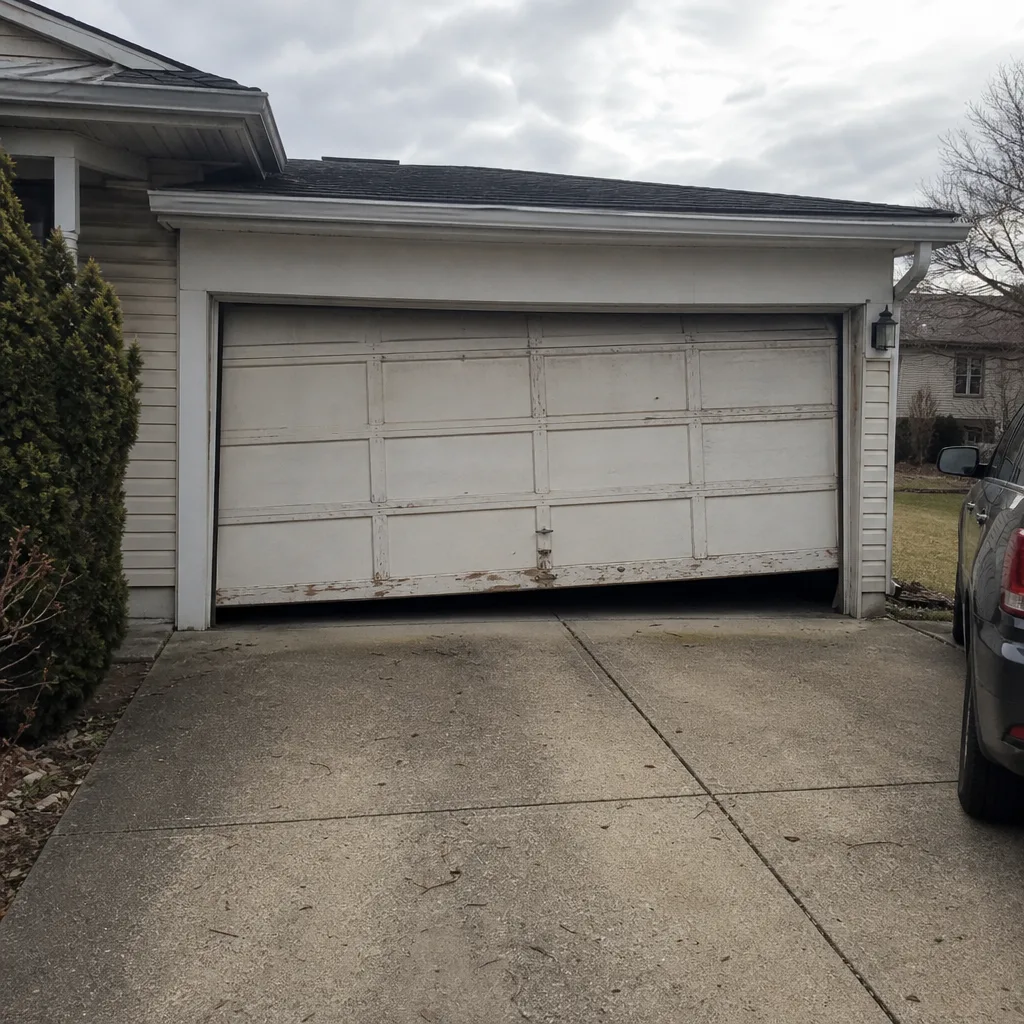 Before
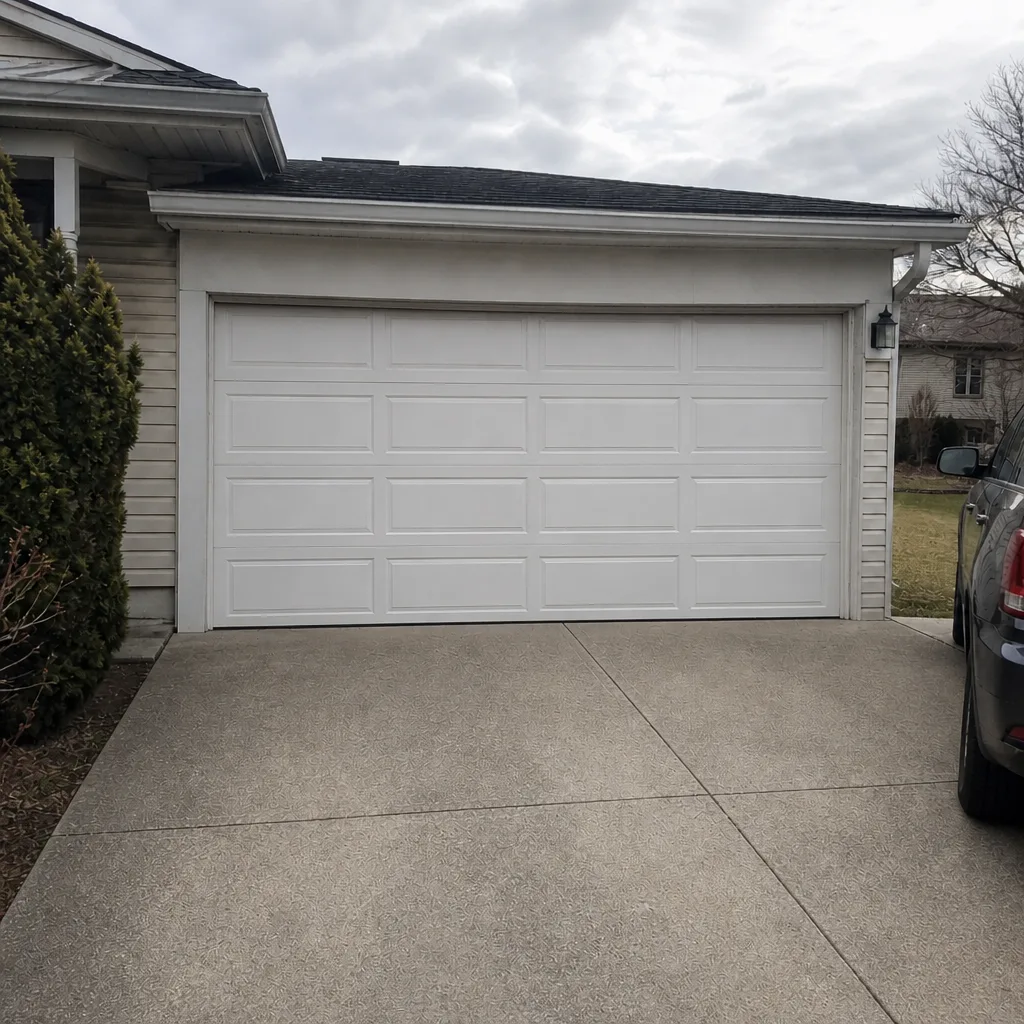 After
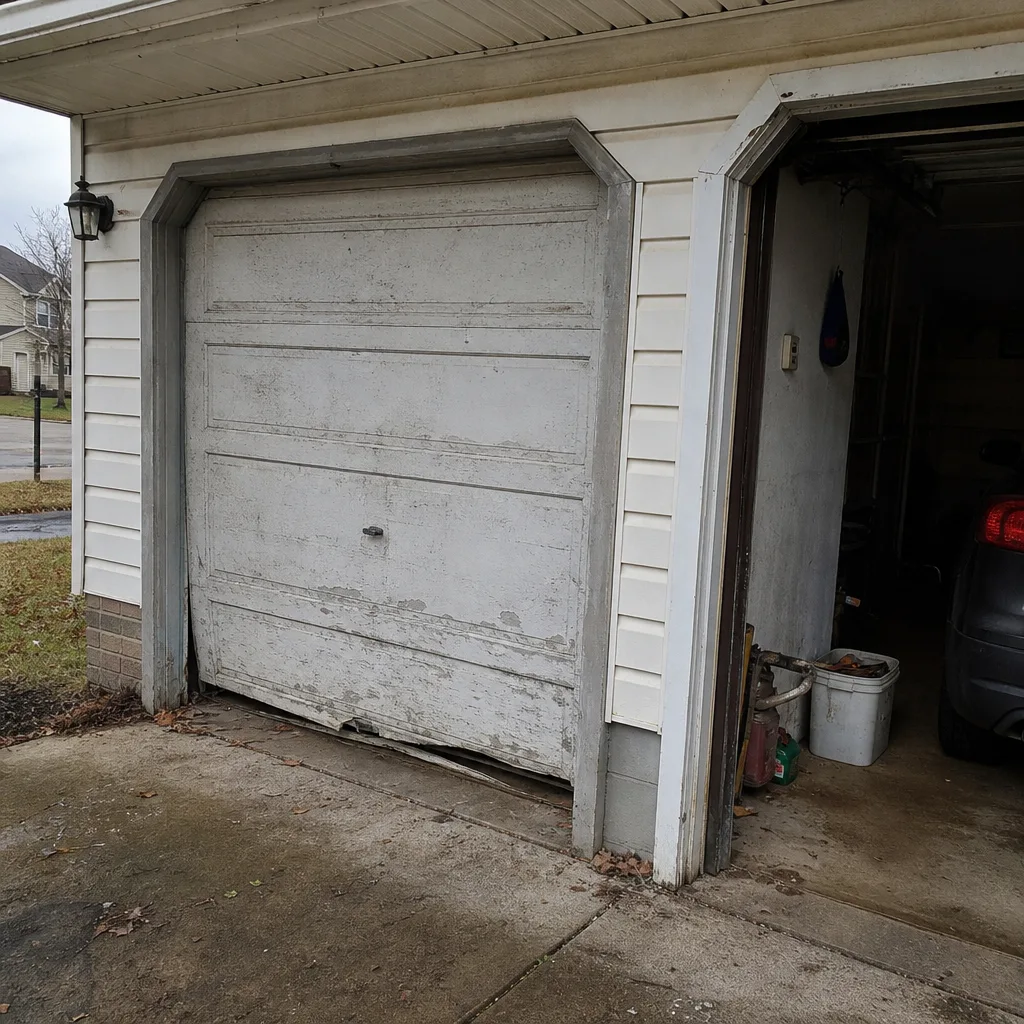 Before
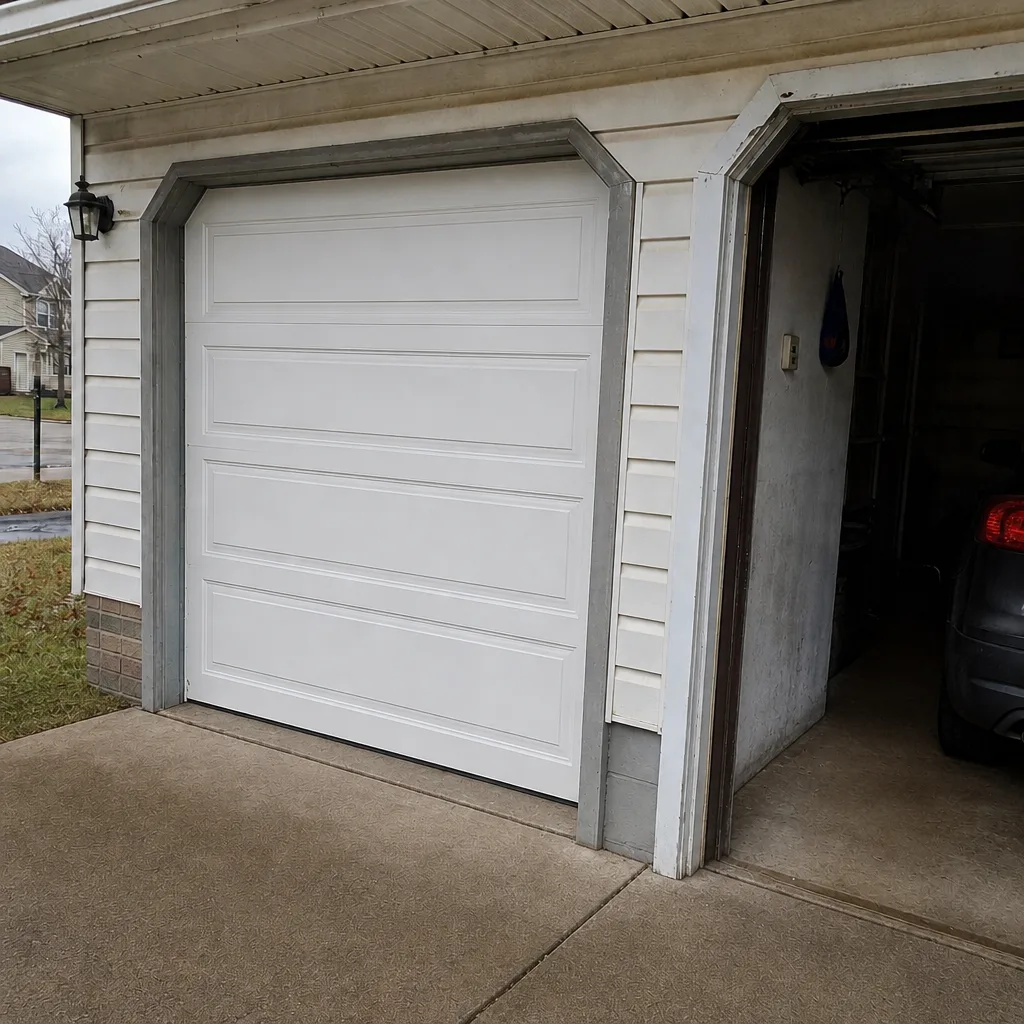 After
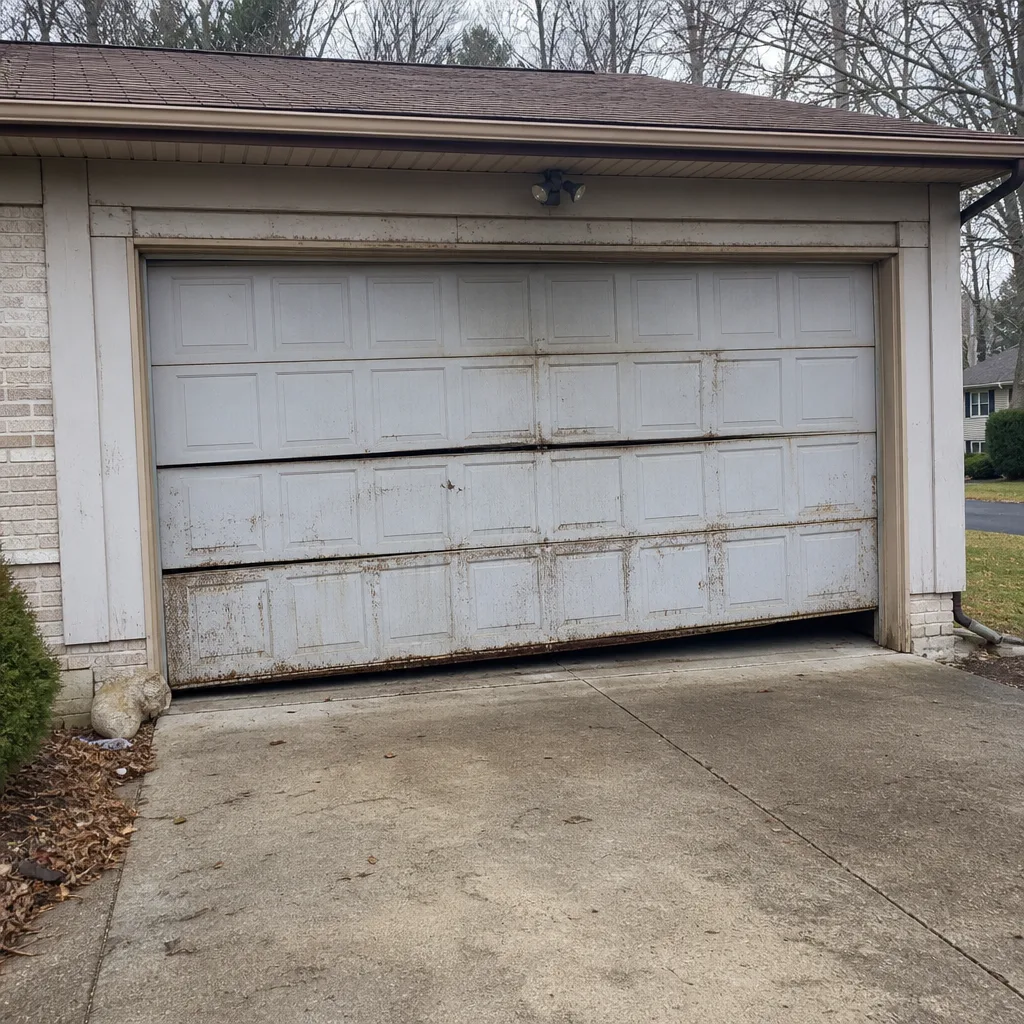 Before
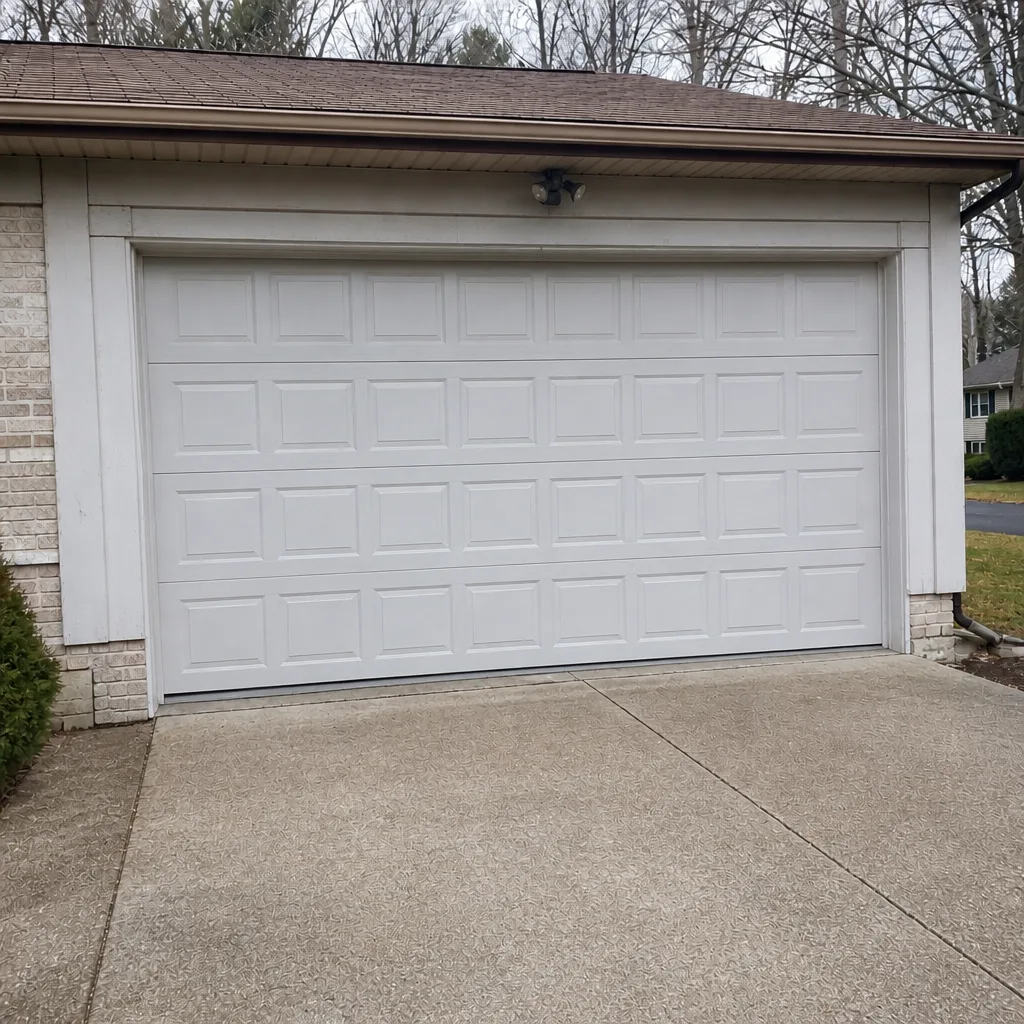 After
When to Call a Professional
Some problems can wait a week. These are the ones that can’t.
Call a professional if a spring is snapped or shows a gap, if the door is uneven or drops unexpectedly, or if you hear a bang from the garage and the door won’t open smoothly afterward. Call if the door reverses on its own, if the opener’s force test fails, if the cables are visibly frayed, or if the door won’t close fully at all. And call if you’re not sure – a phone conversation is faster than a mistake. We work on the brand already on your garage, from the opener to the springs, so one call covers it. Garage Door Repair Cranberry offers free estimates in Cranberry Township – call (855) 658-4219. Our technicians have up to 14 years of experience, and we’re trained on LiftMaster, Chamberlain, Genie, Clopay, Amarr, Wayne Dalton, Craftsman and Raynor systems. Same-day service is available for urgent situations; for replacement or installation work, we’ll measure and quote before anything is ordered.
Frequently Asked Questions
Twice a year is the usual recommendation, once in the fall before the freezes and once in the late spring. Use a light garage door lubricant, not heavy grease, because the wrong product stiffens in cold weather and can do more harm than good. If your door is very active (it’s your primary entry point, for instance), check the lubrication level more often.
Typical prices in the Cranberry Township market run in the range of $180 to $340 for a single spring, and more for a matched pair, because both are usually replaced together. Spring repairs are quoted and agreed before any work starts, and the written estimate sets the final price. Call (855) 658-4219 for an exact quote – estimates are free.
In most cases, yes. We offer same-day service for urgent situations, and a snapped spring that has left you without a working door is exactly that kind of situation. Emergency garage door service is real, not a 48-hour wait. Call (855) 658-4219 and we’ll give you a realistic time window.
No. Torsion springs are under extreme tension and can cause serious injury if released incorrectly. Even homeowners who are comfortable with DIY work should leave spring adjustments, replacements and cable work to a trained technician. If you’re not sure what’s going on with the door, call us before touching it.
The photo-eye test checks whether the infrared beam between the two sensors is unbroken, so the door reverses if something crosses the doorway while it’s closing. The force test checks whether the opener is calibrated to reverse when the door meets physical resistance. Both need to pass. A door can pass the photo-eye test and still have the force setting too high, which is a safety problem.
If the job involves springs, cables, torsion hardware, track adjustment or opener force calibration, call a garage door specialist. A general handyman can tighten a loose hinge or replace a weather seal, but the structural, tension-critical parts of the system need someone trained on them. Call (855) 658-4219 and we’ll tell you honestly which category your issue is in.
It can, and that’s the most common seal failure in this area. When the seal loses its spring or sits unevenly against the floor, meltwater runs under the door. Inspect it in early spring and replace it if it’s brittle or no longer touching the floor all the way across.
The Bottom Line
A garage door maintenance checklist worth keeping is one built around the way doors actually fail in Cranberry Township – not a generic calendar. Condition-based inspection beats a fixed schedule, and most of what properly matters comes down to a handful of things: check the torsion spring after any stretch of hard freezes below 10°F, inspect your 2000s-era rollers and hinges, run the auto-reverse and force tests properly, look at the bottom seal before mud season, and know where the safe/unsafe line is. The work you can do is real work, and it prevents most expensive failures. The work you can’t safely do – springs, cables, and force calibration – is worth calling a technician for. Call (855) 658-4219 for a free estimate in Cranberry Township, whether you want a check-up on the door you have or a written price on a replacement. We work on the brand already on your garage.
Written by the team at Garage Door Repair Cranberry.