Last updated November 23, 2026
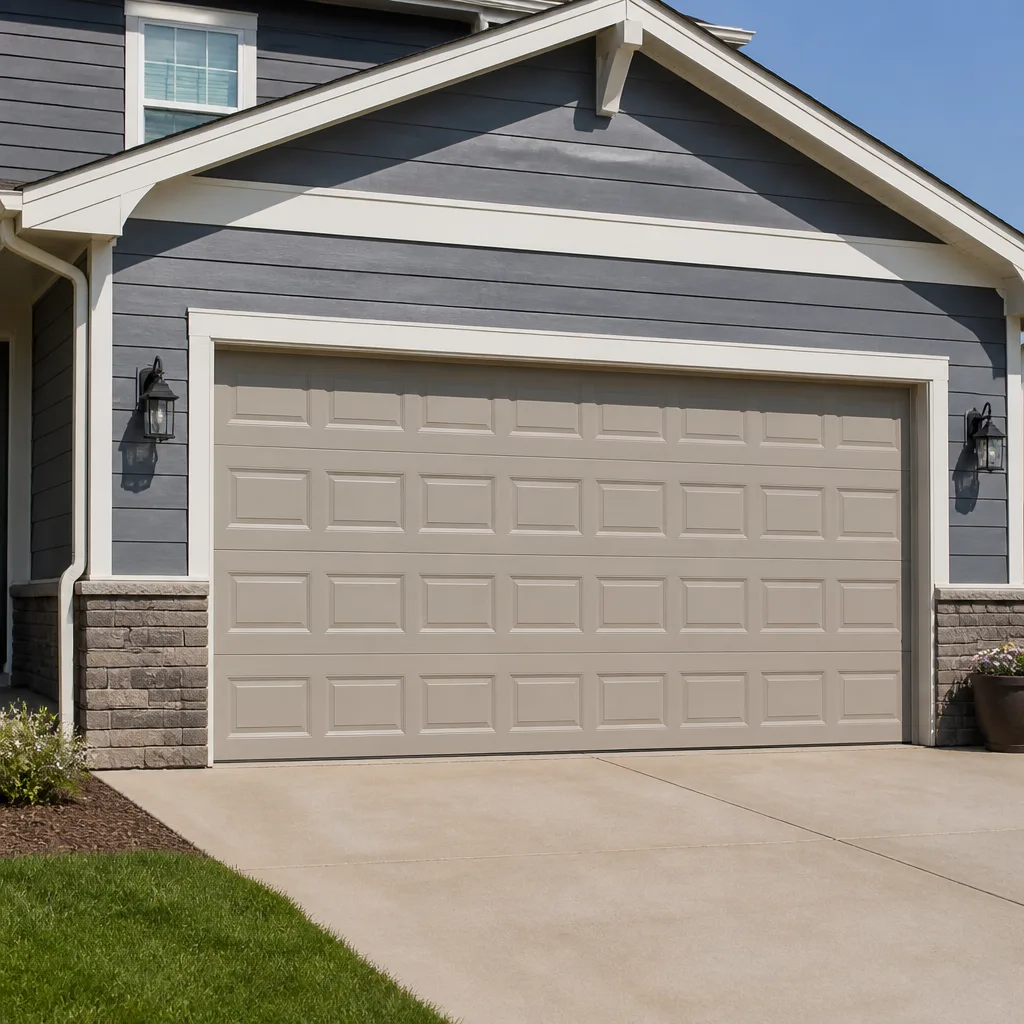 Raised-panel steel
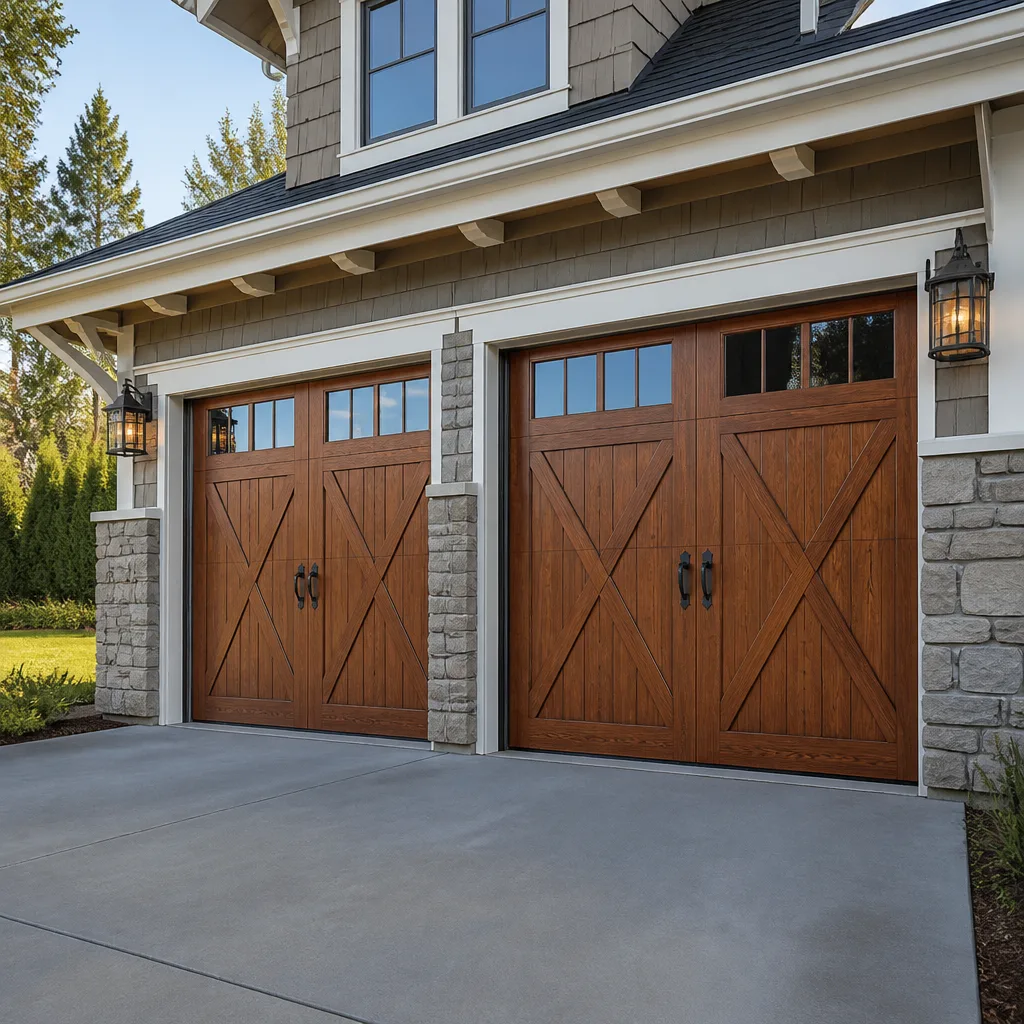 Carriage house
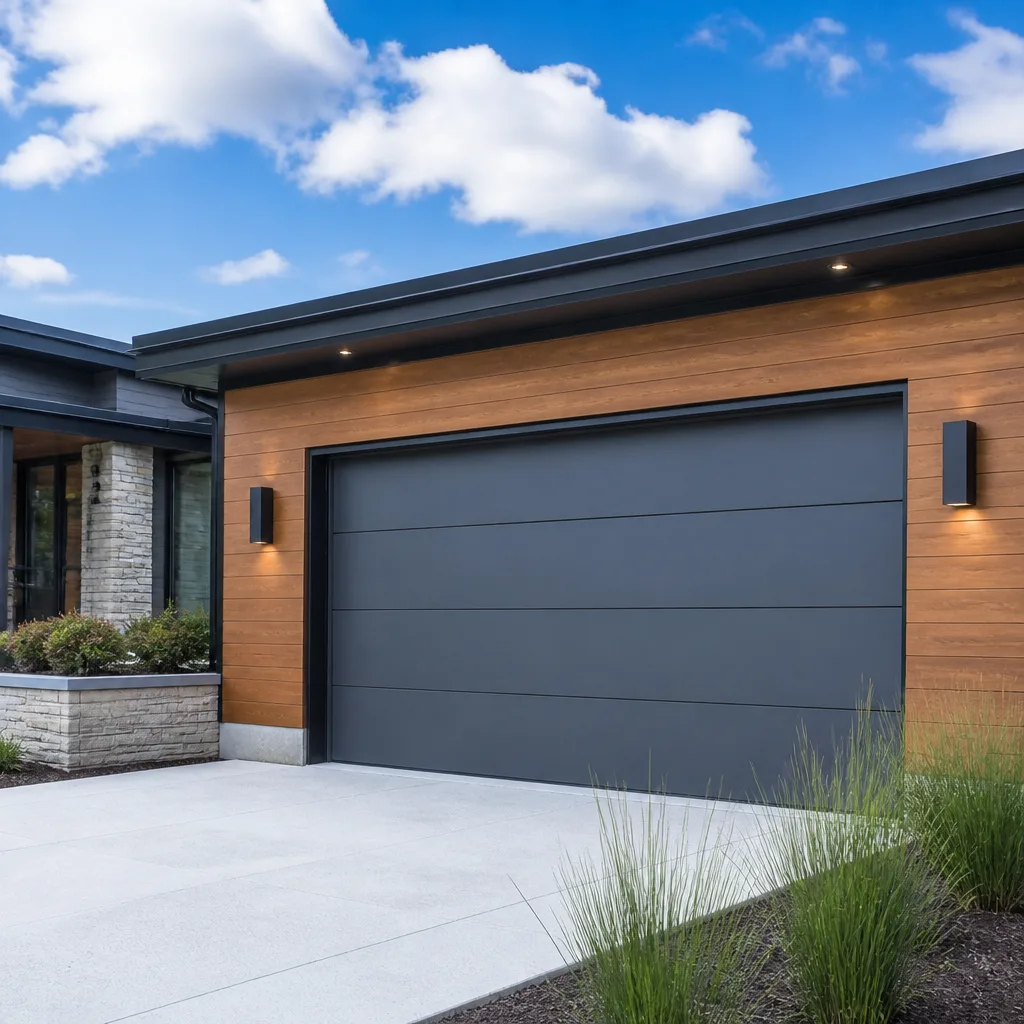 Modern flush
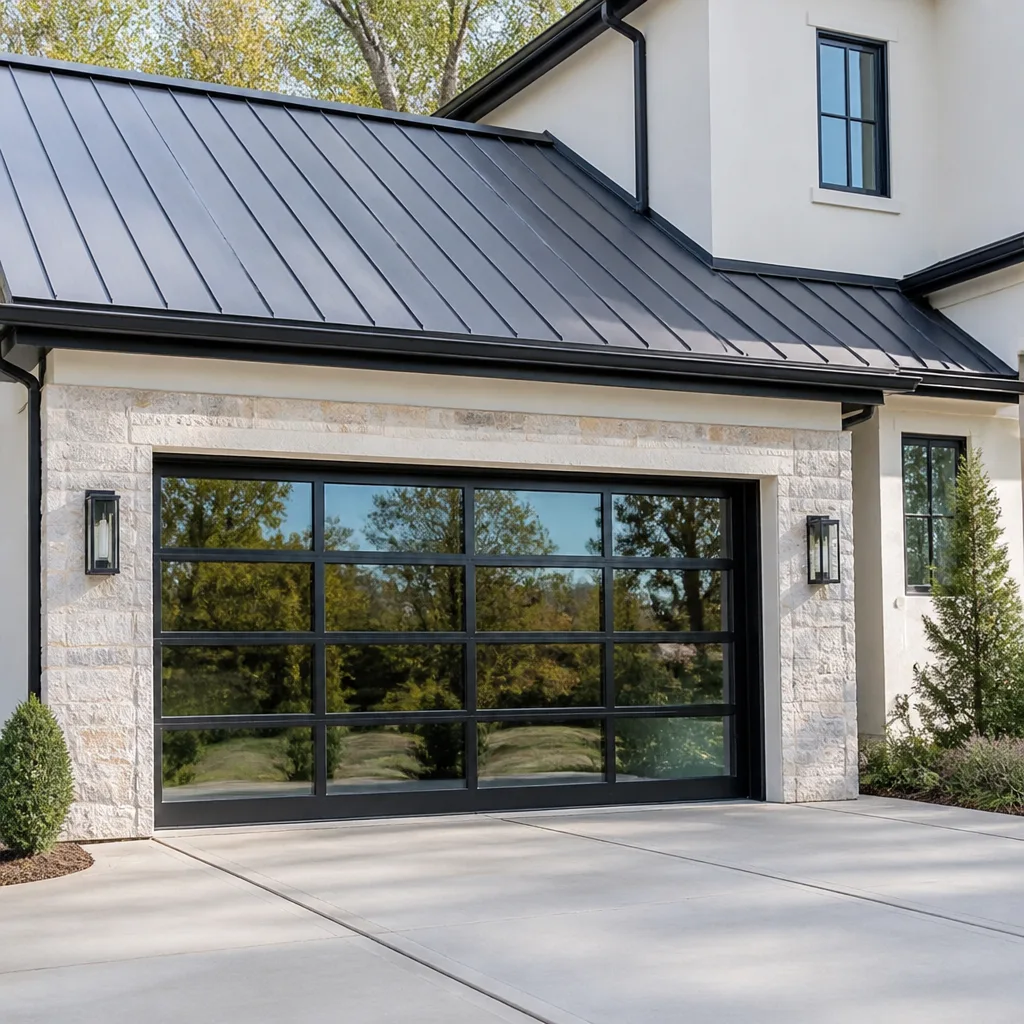 Full-view glass
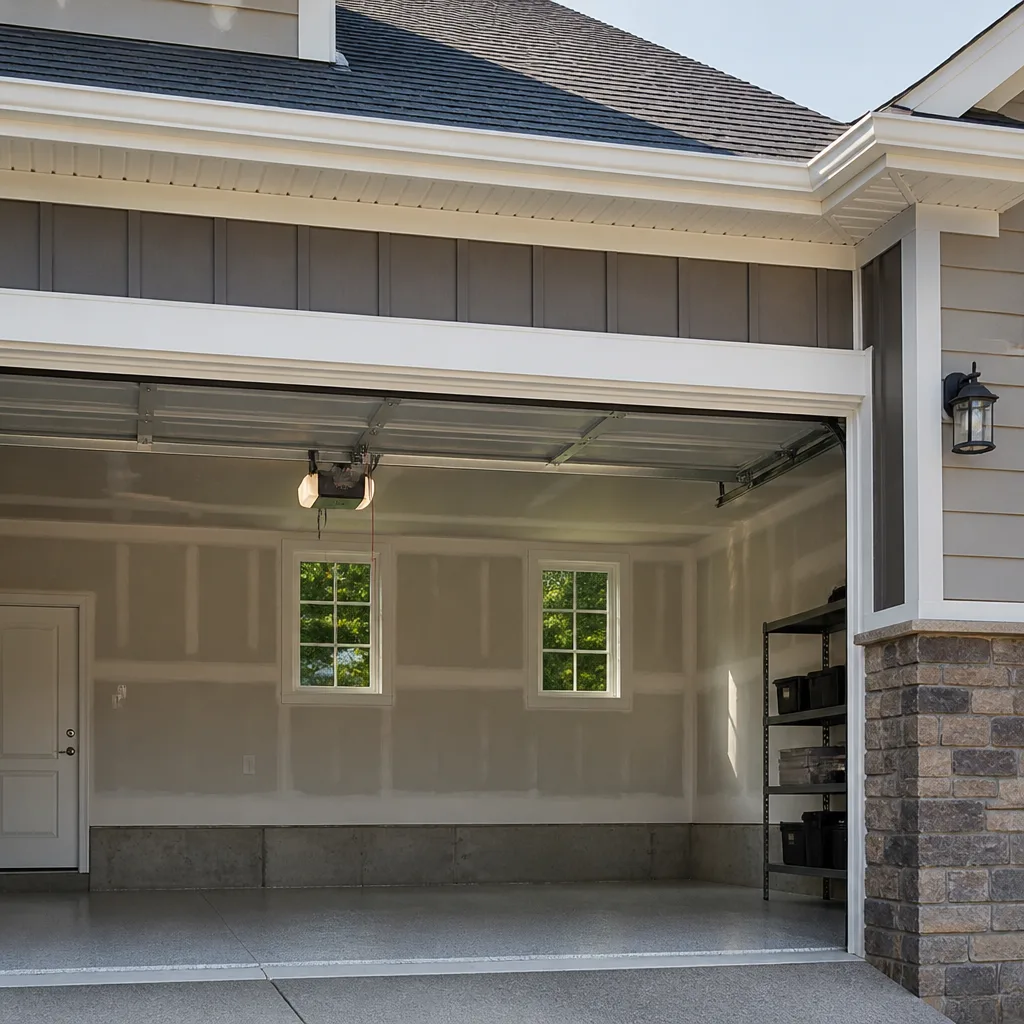 LiftMaster openers
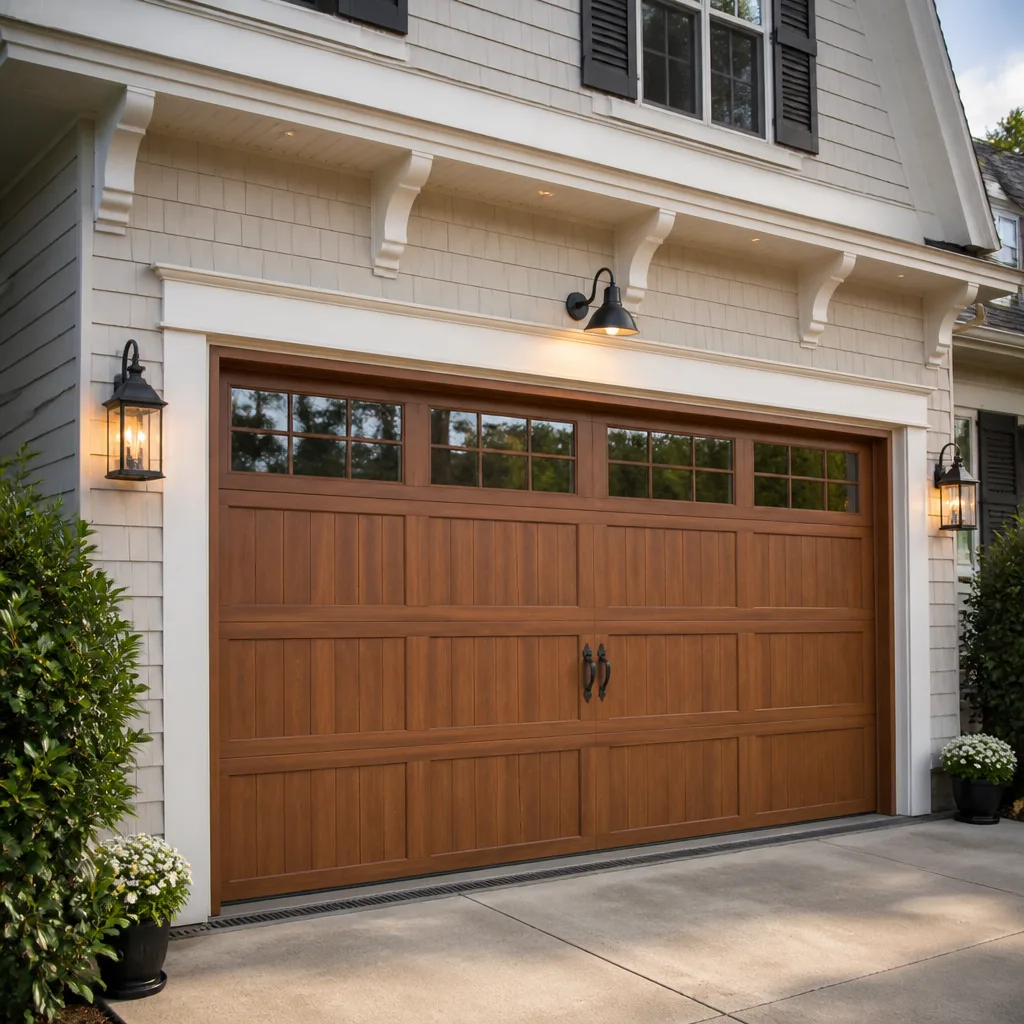 Chamberlain openers
Full 25-point door and opener safety check with every visit - springs, cables, rollers, tracks, and your LiftMaster or Chamberlain opener included
You get a price before we start. It does not change when the pro arrives.
Get your free estimateGarage Door Warning Signs: A Cranberry Township Homeowner’s Reference Guide
Most garage doors don’t fail without warning. They telegraph the failure for weeks, sometimes months, and the signals get ignored because they sound like normal noise or look like normal wear. That grinding when the door opens isn’t “just the door being old” – it’s one of four distinct sounds, each pointing to a different component, and three of them are fixable for under $200 when caught early. This guide maps the sounds, the visual cues, and the timing signals that tell you whether you have a 30-day service window or a stop-using-the-door-now situation. We’ll show you what Cranberry Township‘s freeze-thaw winters do to these systems and how to read the symptoms before they become a snapped spring and a blocked car in the driveway.
Quick Answer
The most reliable warning signs of garage door trouble are grinding, popping, squealing or banging sounds, visible asymmetry in a moving door (one side lagging, a slack cable), a bottom seal pulling away or flattening, and a slow opener response in cold weather. Noise that started gradually and worsens is usually a repairable component like a roller, hinge or opener gear. A loud bang followed by a door that won’t lift is a broken torsion spring and demands immediate professional attention.
Styles & brands we work with
- Raised-panel steel
- Carriage house
- Modern flush
- Full-view glass
- LiftMaster openers
- Chamberlain openers
Table of Contents
- The Sound-to-Cause Reference: Grinding, Popping, Squealing, Banging
- Visual Asymmetry and Slack Cables
- Cold Weather: Is It the Opener or the Spring?
- Bottom Seal Failure and Water Intrusion
- Signs That Mean Stop Now vs. Signs That Give You 30 Days
- The Walk-Around Visual Inspection
- Opener Warning Signs and Smart-Hub Alerts
- Seasonal Patterns in Cranberry Township
The Sound-to-Cause Reference: Grinding, Popping, Squealing, Banging
Garage doors make four distinct problem sounds, and each one traces back to a different mechanical component. Once you can tell them apart, you’ll know whether you’re dealing with a $100 roller replacement or a spring call – and how urgently to act. Cranberry Township’s winters, with repeated freezing and thawing, tend to amplify several of these sounds because metal contracts and lubricants thicken. What follows is a sound-to-cause map drawn from the calls we take most often.
Grinding
Grinding has a rough, metallic drag to it. It usually points to worn steel rollers, a dry torsion tube, or a bent track section the door’s edge is scraping against. Grinding is the classic “fixable for under $200” sound. If a technician catches it early, new rollers or a lubrication service usually resolves it.
Popping
Popping is a sharp, intermittent click or pop as the door travels. It’s often a loose hinge plate, a roller jumping its track, or a cable drum that’s slipped slightly on the torsion shaft. Popping is a structural warning: keep using the door and the roller can pop completely out of the track, dropping one side of the door. Squealing.
Squealing
A high-pitched squeal is the friendliest of the four. It typically means dry hinges, a dry bearing, or missing lubrication at the roller stems. Left alone, dry metal grinds itself away. Squealing is a warning to lubricate and inspect, not a call to panic. Many homeowners can handle basic lubrication with a proper garage-door lubricant.
Banging
Banging is the sound that ends with “and then it wouldn’t open.” A loud bang from the garage usually means a torsion spring has snapped or a cable has let go. This is where we tell people to stop using the door immediately. Springs are under extreme tension – this is specialist work, and no homeowner should attempt to replace one. A single spring typically runs $180 to $340 to replace; a matched pair, which is usually replaced as a set, runs about twice that. If you have a garage door spring repair situation in Cranberry Township, the correct response is to leave the door shut and call.
Visual Asymmetry and Slack Cables: The Torsion Spring Tell
A garage door that lifts unevenly – one side trailing by even an inch – is showing you the earliest visible sign of torsion spring wear. Torsion systems distribute tension through a central shaft to two cable drums. As one spring winds down or a cable stretches, the drum on one side turns slightly less than the other. The door still opens. It just opens crooked. Most homeowners miss this because the door “works,” but asymmetry is the cheapest warning you’ll ever get.
What to look for
- Watch the top of the door as it opens. If one corner reaches the header earlier than the other, or gaps unevenly from the weatherstripping at the top, tension is off.
- Look at the two cable pairs. On each side, a braided steel cable runs from the bottom corner up to the drum. A cable that’s visibly slack, kinked, or frayed is a serious concern.
- Check the gap under the door. When the door is fully down, shine a flashlight from inside. An uneven gap along the bottom means one side is riding higher.
- Watch the travel at the close. If the door slams or reverses hard on one side, the limit isn’t matching the mechanical travel.
A slack or frayed cable is a stop-and-call signal. Cables and springs store enormous energy, and a cable that lets go can whip with lethal force. Do not try to re-tension it yourself. When asymmetry is caught early and the issue is a worn spring winding down, a specialist can re-balance or replace the matched pair before the door ever fails. When it’s left, one cold morning the spring snaps and the door becomes a 300-pound problem hanging over the car.
Cold Weather: Is It the Opener or the Spring?
Slow response from the opener on a cold Cranberry Township morning can be either the opener failing to deliver enough torque or a spring that’s lost its lift capacity. Telling the difference saves you a wasted service call. The test is simple and takes ten seconds with the door closed and the carriage disconnected from the drive. Pull the manual release cord, and try to lift the door by hand.
The manual lift test
- Disconnect the opener using the release cord on the carriage.
- Lift the door halfway and let go. A balanced door holds its position with minimal drift. A door that falls is spring or cable trouble.
- Listen for the sound. If you hear or feel banging or a rough catch on the way up, the mechanical side has failed. Stop and call.
- If the door lifts smoothly and holds position, the mechanical side is healthy. Now test the opener – the problem is likely in the unit.
Opener symptoms show up specifically in the cold. A LiftMaster or Chamberlain unit whose logic board is failing may lose its programmed travel limits as temperatures drop, causing the door to reverse mid-travel. A Genie unit with a worn drive gear will hum quietly and then stall when a cold, tight door demands more torque. If your smart-opener app shows a fault code or a “door not responding” status this week but the same cycle worked fine in the fall, the electronics are the likely culprit.
One-word answer: lift the door by hand. If it hangs, it’s mechanical. If it moves, the opener’s failing. We work on the brand already on your garage – LiftMaster, Chamberlain, Genie, Clopay and others – so the diagnosis starts with the right unit. For a deeper look at garage door opener repair, our specialists can trace the electrical and mechanical sides together.
Bottom Seal Failure and Water Intrusion
The bottom seal – the rubber or vinyl strip along the underside of the door – is the most overlooked component on the whole assembly. Homeowners notice when it looks ugly. What they miss is the water intrusion it predicts long before the first puddle shows up. In Cranberry Township, wet pavement and slush live under the door for months of the year, and a compromised seal lets that moisture track into the garage floor, rust out the bottom panel, and stress the opener and the door’s bottom brackets.
The visual signs of early seal failure
- Flattened or compressed seal. The strip should look round and springy along the full width. A seal that’s dented in one spot means the door is riding unevenly there.
- Pulling away at a corner. A visible gap at either end means direct air and water infiltration during a blowing rain.
- Grey haze or cracking. Once the rubber shows a chalky bloom or fine surface cracks, it’s hardened and won’t seal against the concrete.
- Mildew on the garage floor. A dark, damp stain along the seal line – not a full puddle yet – is water wicking under the door.
- Cold air on your ankles. On a cold morning, air pulling in under the door tells you the seal isn’t contacting. That same gap lets meltwater pool on the slab.
A bottom seal is one of the least expensive repairs available and one of the highest value. Catch it before the first hard freeze and the door still holds a good seal through the thaw. On a Clopay or Amarr door in particular, the seal profile matters – the right replacement matches the door’s bottom panel, not just the door’s width. A generic strip that doesn’t match profile is a leak waiting to happen.
Signs That Mean Stop Now vs. Signs That Give You a 30-Day Window
Most warning signs are not emergencies but get treated as emergencies by worried homeowners. A few are genuine emergencies and get treated like “I’ll get around to it.” Sorting between the two is the most useful skill in this whole guide. If any of the following are present, stop using the door today.
Stop using the door immediately
- You heard a loud bang and the door won’t lift. That’s a break, and there’s a 300-pound panel hanging by gravity.
- A visible cable is slack, kinked or frayed on either side. A hanging car in the driveway is a real risk.
- The door is off its track, tilted, or resting on the floor unevenly. Forcing it will almost certainly twist the panels.
- The torsion spring shows a visible two-inch gap in a coil or a snapped end sticking up. Do not attempt adjustment yourself – springs are under extreme tension and this is specialist work.
- You can see daylight where the door meets the ground on only one side, and the door traveled up asymmetrically. Ride it lightly at most; call in the specialist.
You have a 30-day service window
- Grinding noise that only started recently, door still travels the full route and reverses correctly on obstacle.
- Squealing that worsens each cycle, but the door lifts smoothly by hand.
- Slow opener response in cold, but the door travels by hand without resistance.
- A bottom seal that’s flattened or pulling, with a dry garage floor still.
- Intermittent opener faults in the app or remote that clear on a repeated button push.
In our experience, most calls we’d classify as a 30-day window become a same-morning emergency when they’re ignored through a Cranberry Township cold snap. Book a proactive inspection in that window. The full range we cover, from rollers and seals to springs and full replacements, sits under our garage door repair service. If you’re still deciding whether it’s a repair or a replacement, the walk-around below clarifies the call.
The Walk-Around Visual Inspection
Most garage door failures announce themselves before anything breaks. A five-minute walk-around, done once a season, catches the majority of the problems we see in Cranberry Township homes and gives you a service window instead of an emergency. It’s entirely safe from outside the door and below it, and requires no tools.
The five-minute visual route
- Stand inside and look up at the springs. Note any gap, uneven coil spacing, or rust bloom at the anchor. Do not touch.
- Look along the floor gap on both sides. If one corner sits higher than the other, note it – that’s asymmetry.
- Trace both cables visually from the bottom corner to the drum. A kink, a slack, or a fray is a no-drive sign.
- Inspect the bottom seal along the full width. Check for flat spots, cracks, and corners pulling away.
- Look at the tracks – the two vertical rails. A bent section, a loose fastener, or a track with a visible bow means the rollers are already working against it.
- Cycle the door once and watch it travel fully. Note any hesitation, rattle, or sound that wasn’t there last season.
- Test the safety reverse by placing a two-by-four flat on the pavement under the door, closing it, and watching it reverse on the obstacle. If it doesn’t reverse, the door is unsafe and needs an opener check today.
Any one of those seven failing gets you on the phone. Keeping a note of what you see season by season makes your next Garage Door Repair Cranberry visit faster and gives the technician a clear picture of how the symptom developed. And because openers from LiftMaster, Chamberlain, Genie and Craftsman each have their own safety-reverse behavior, a technician needs to see the exact unit to verify the fix. That’s the reason the walk-around matters – it puts the right person and the right part on the right problem.
Opener Warning Signs and Smart-Hub Alerts
Opener failure announces itself with specific, repeatable signs that are distinct from door-mechanical warnings. Homeowners with smart-hub apps from LiftMaster or Chamberlain get more forewarning than they realize: a fault notification, a repeated “obstruction” event, or a remote that only works from one distance is a data point, not a glitch. Legacy units from Genie and Craftsman fail in similar patterns but without the app trail, so the physical symptoms matter more.
Signs the opener itself is failing
- The remote only works up close. Usually a receiver, antenna or battery issue, but sometimes a board going bad.
- The wall button works but the remote doesn’t. Opens up a pairing, receiver or logic-board issue that needs testing on-site.
- The door reverses for no visible reason. Often the safety-sensor alignment, sometimes the opener’s force limit setting.
- The opener runs but the door doesn’t move. A stripped drive gear or a disengaged carriage.
- The opener hums and stops. A motor under strain from a door that’s mechanically bound, or a worn drive component.
- Fault codes in the app. Take a screenshot – a technician can translate them faster than a guess.
- Lights blink in a pattern. Modern LiftMaster, Chamberlain and Genie units use blink codes; note the count.
The good news is that opener electronics are incredibly reliable when the door they drive is mechanically healthy. A failing opener is often a symptom of a door that’s gotten heavy – worn rollers, a tired spring, or a dry torsion tube. A technician can trace the two together so you’re not replacing a perfectly good opener when the actual problem is the door. Our technicians have up to 14 years of experience reading exactly these units, and we service the whole range – repair, openers, springs and installation – through the full life of the door.
Seasonal Patterns in Cranberry Township
Garage door warning signs in Cranberry Township follow the seasons closely. Western Pennsylvania’s freeze-thaw rollercoaster stresses every metal component on the door. Recognizing the seasonal pattern lets you inspect the right part at the right time instead of waiting for a failure.
Winter: the failure magnifier
Cold mornings expose weakened springs. A spring that’s been quietly losing tension for months will lift the door on a 45-degree afternoon but fail at 15 degrees. Dry cold cracks the bottom seal and hardens the rollers. Openers running on batteries in remotes fail noticeably more in winter. This is the season to pay close attention to any slow response, grinding, or asymmetry.
Spring thaw: the moisture test
Meltwater pools along the garage floor line. This is when a compromised bottom seal becomes visible – damp concrete, mildew, and a door that seems to drag. The torsion system begins working properly again but any spring weakness from winter is now obvious. This is a good time to inspect seals and door balance.
Summer: heat and expansion
Wood panel doors swell slightly, which can make the door stick at the edge of its track. Metal panels expand. Rollers may loosen in their stiles. This is the season to look at track fit and roller condition.
Fall: the pre-winter inspection window
Fall is the best time to catch a developing problem. Shorter days mean the door cycles more often, and the first cold snaps will expose any weakness that developed in summer. A balance test and full visual walk-around in October is the cheapest insurance you can buy going into a Cranberry Township winter.
Common Mistakes to Avoid
- Mistaking a bang for a slam. A loud bang from the garage is almost always a snapped spring, not a heavy-close issue. Treat it as a stop-using-the-door event and don’t try to lift the door by hand – it can weigh 300 pounds or more.
- Lubricating with the wrong product. WD-40 is not a garage door lubricant and will actually strip the existing grease from hinges and rollers. Use a proper garage-door product, applied lightly, and never spray anything on the springs or cables.
- Forcing a stuck door. Backing the car out past a tilted or binding door is a common reason panels get twisted and tracks get bent. A $150 track adjustment becomes a $700 panel replacement when forced.
- Ignoring the asymmetry warning. A door that lifts unevenly by an inch is fixable in that window. When a Cranberry Township cold snap is coming, drive on it anyway and it usually becomes a snapped spring on the most inconvenient morning of the week.
- Letting the bottom seal go one more season. A compressed seal lets meltwater pool on the slab through the thaw, which accelerates rust at the bottom bracket and the panel seam. The seal is one of the cheapest components on the door – replace it before it starts costing real money.
- Buying a generic replacement remote. Aftermarket remotes frequently lose signal strength and sometimes re-pair to themselves incorrectly. The LiftMaster, Chamberlain, Genie and Craftsman systems each want the right frequency and rolling code; a genuine unit is worth the small difference in price.
- Trying to diagnose the opener first. Most “opener failures” in western Pennsylvania homes turn out to be a door that got heavy. If the door doesn’t lift smoothly by hand, the opener isn’t the primary problem – it’s the messenger.
- Skipping the safety-reverse test. The two safety sensors at the bottom of the track are the most critical safety feature on the whole system. If the door doesn’t reverse on an obstruction, stop using the door until a technician checks it.
See the difference
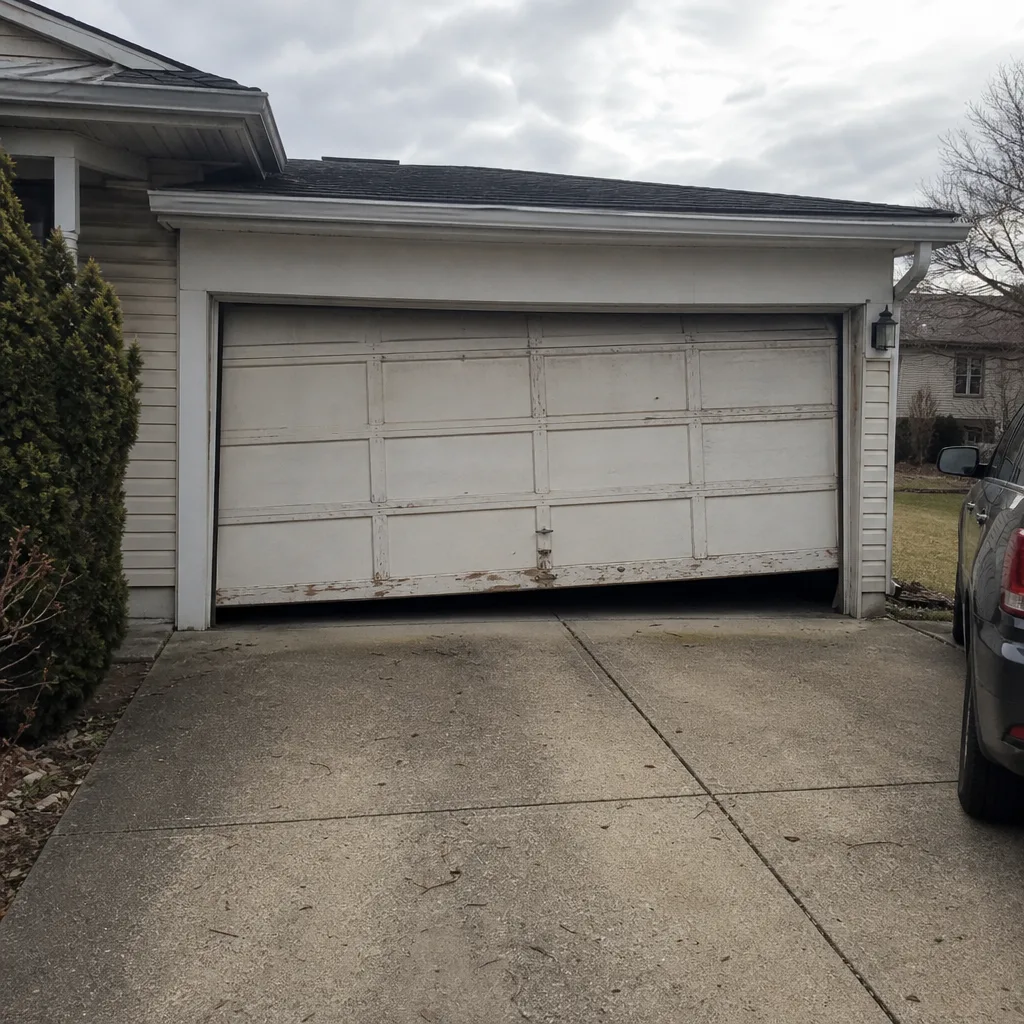 Before
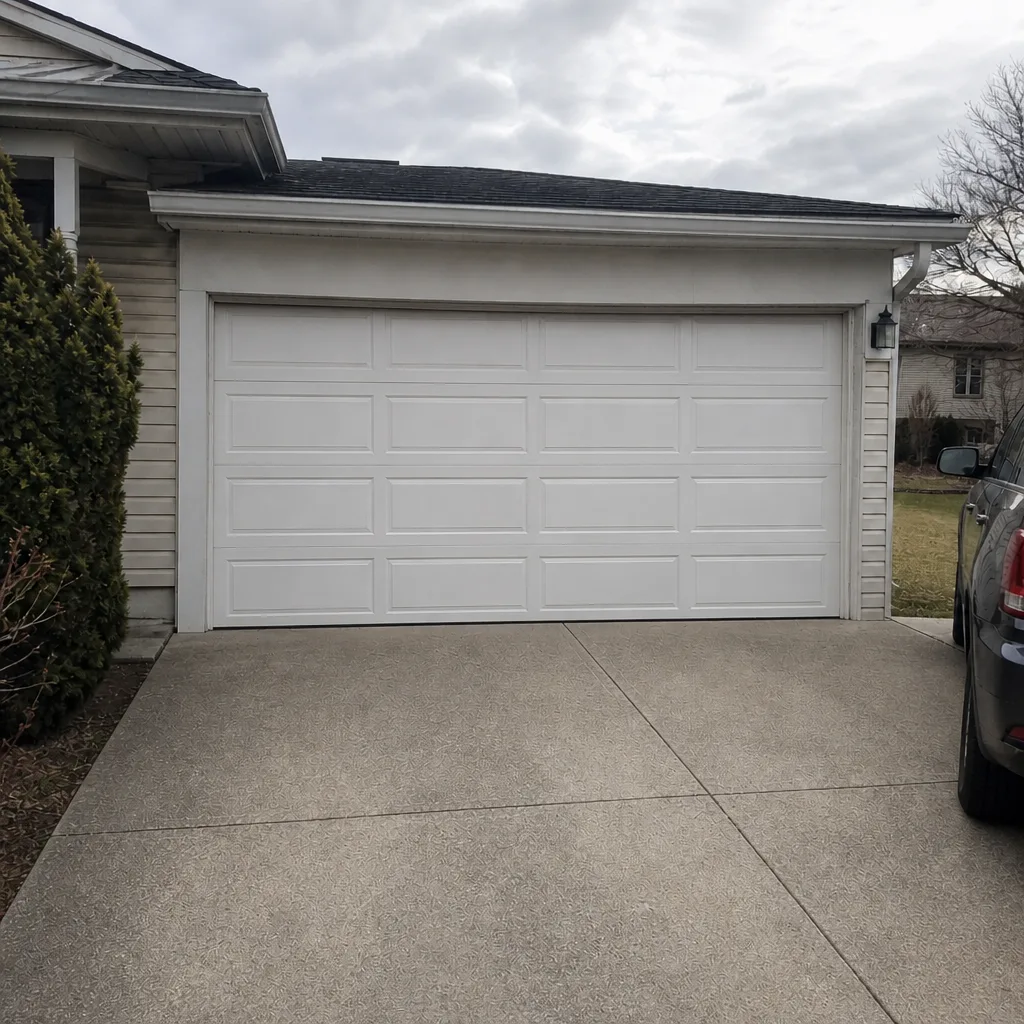 After
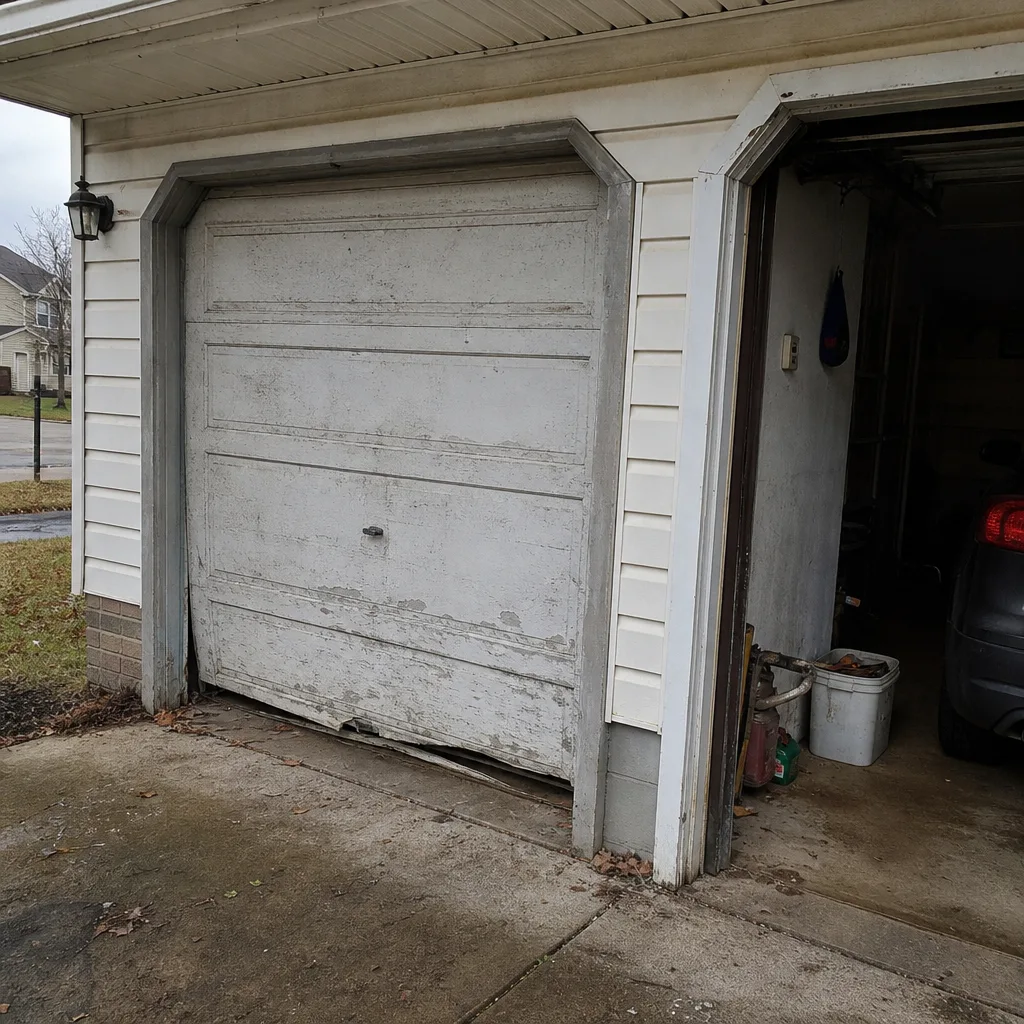 Before
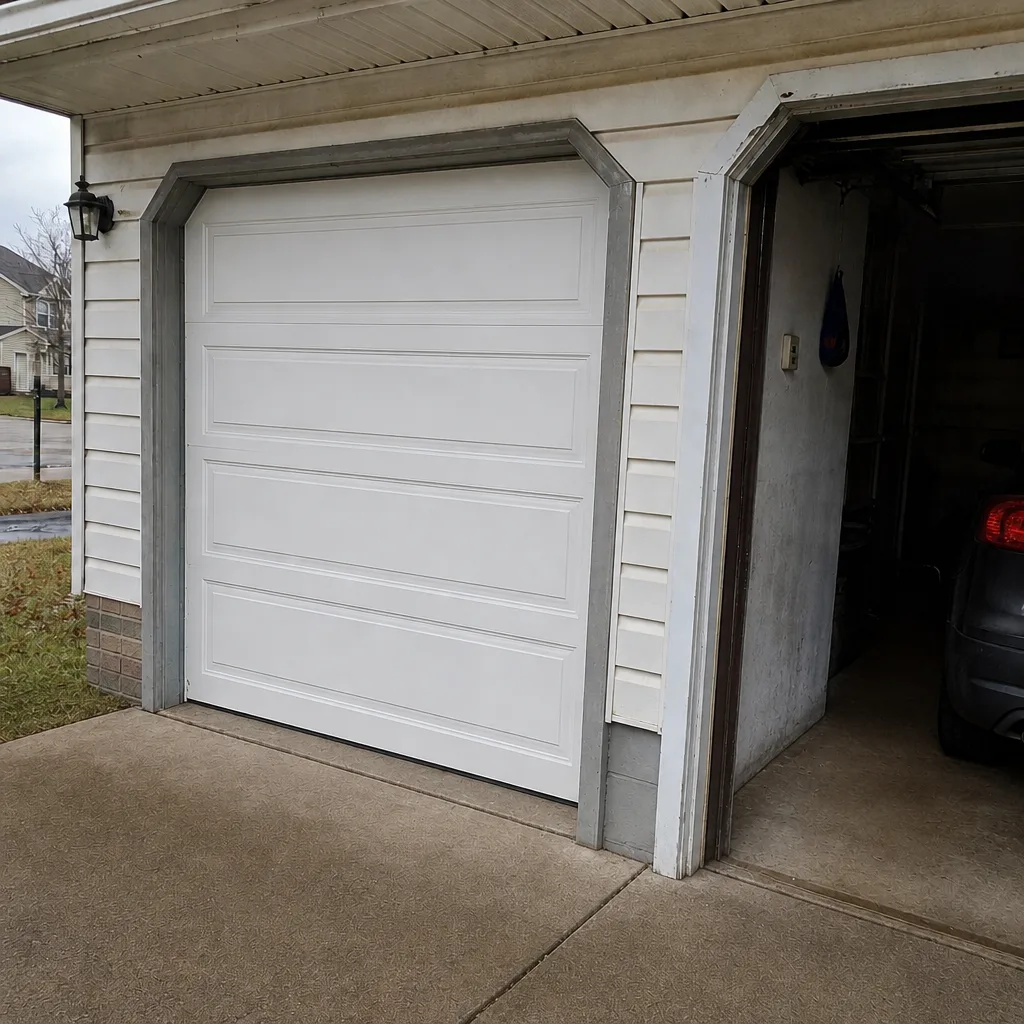 After
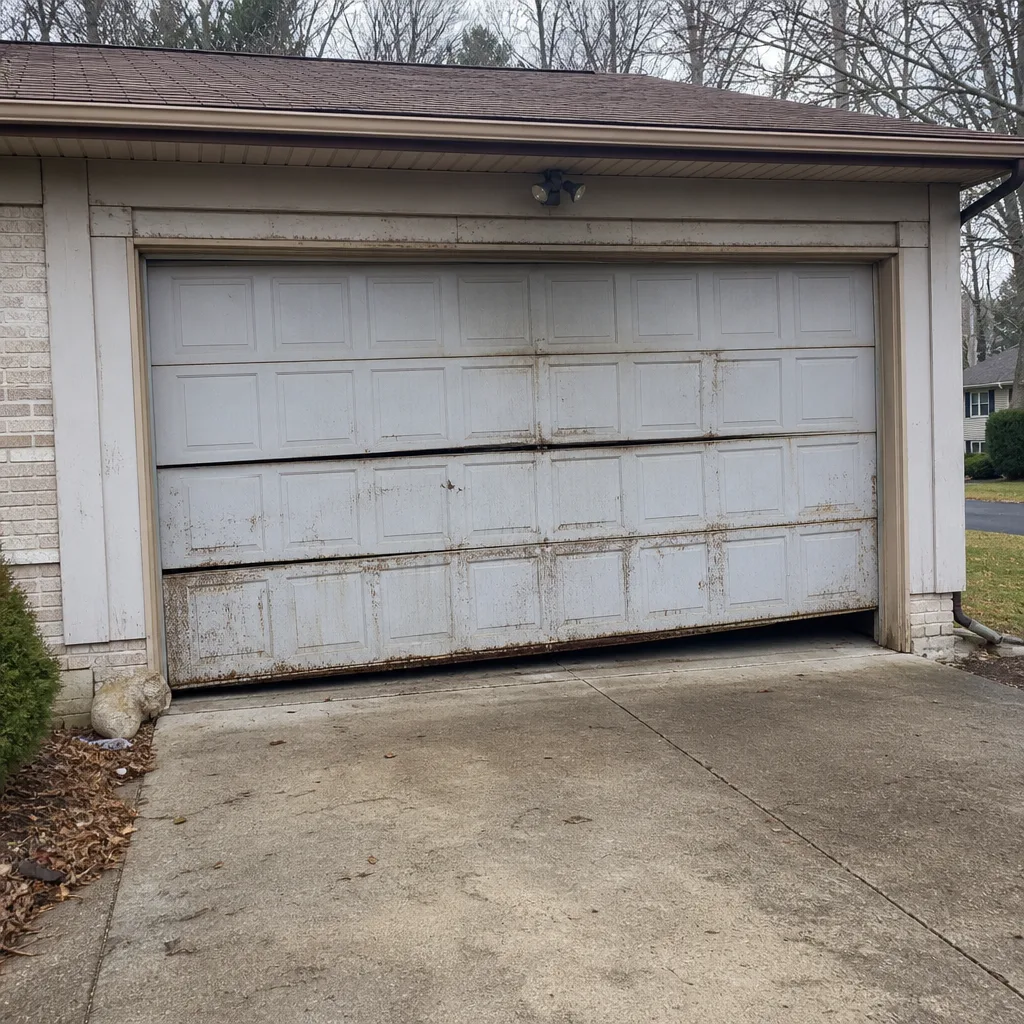 Before
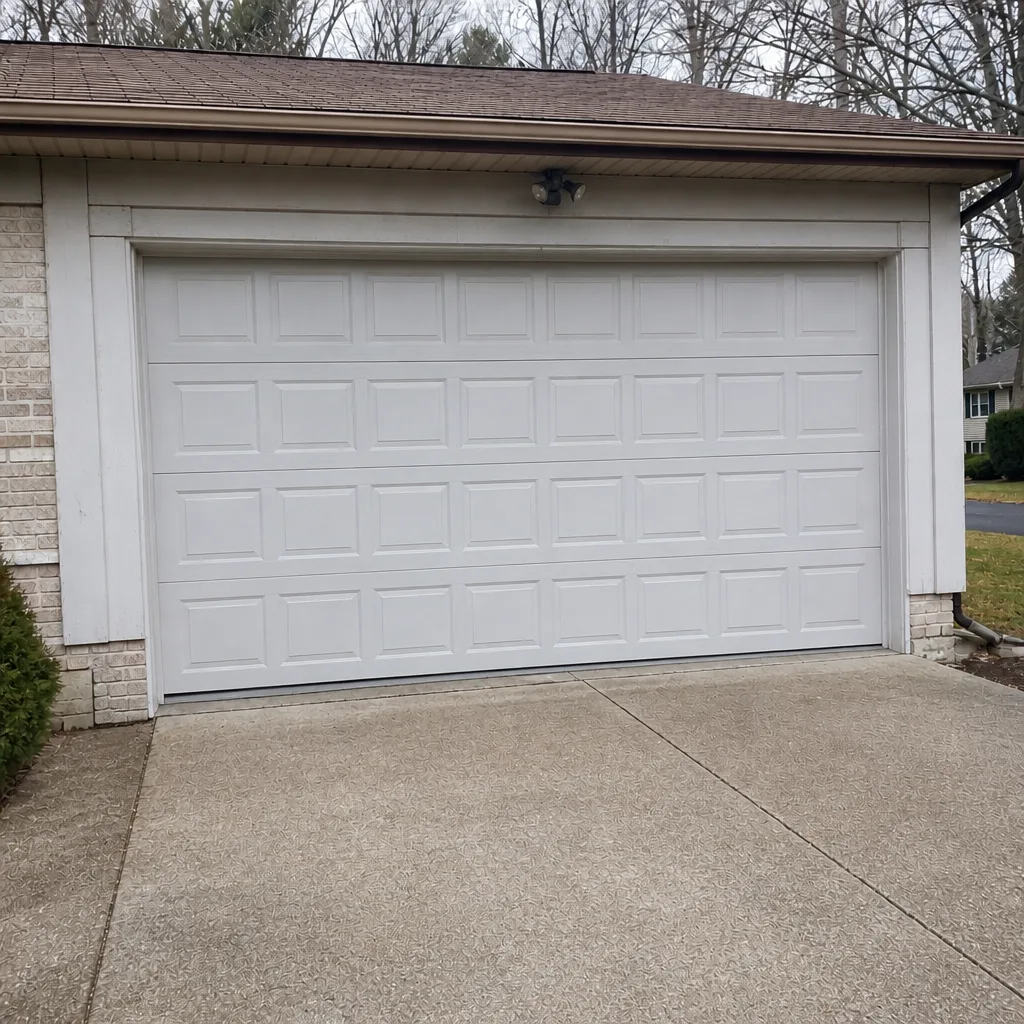 After
When to Call a Professional
Call a professional today if the door won’t lift, if you heard a bang and it won’t move, if a cable is slack or frayed, if the door is off-track, or if the safety reverse has stopped working. Call within 30 days if you hear grinding, popping, or constant squealing; if the door lifts unevenly; if the bottom seal is pulling away; or if the opener shows repeated fault codes. Springs and cables are strictly professional work: they’re under extreme tension, and an incorrect adjustment can cause serious injury. Garage Door Repair Cranberry offers free estimates in Cranberry Township – call (855) 658-4219. Emergency garage door service is a confirmed offering, built for same-day situations when the door won’t open or secure.
Frequently Asked Questions
The earliest warning signs are a new grinding or squealing sound, a door that travels up unevenly side to side, a visible slack cable, or a bottom seal that’s flattened or pulling away at a corner. Slow opener response in cold weather is also an early sign. Any of these earns a professional inspection within a month – catching them early is usually a smaller repair than waiting.
Grinding usually means worn steel rollers, a dry torsion shaft, or the door’s edge scraping a bent track. It’s typically a fixable-for-under-$200 repair when caught early. If the grinding started recently and the door otherwise travels fully and reverses correctly, you have a 30-day service window. Call (855) 658-4219 for a free estimate in Cranberry Township.
Test it by hand. Pull the manual release cord, then lift the door halfway and let go. A door that holds position and lifts smoothly by hand means the opener is the problem. A door that sags or falls means the spring or cables are the problem and should be looked at immediately – springs are under extreme tension and this is specialist work. Call (855) 658-4219 for a free estimate once you know which side is failing.
Yes, popping is a serious warning and it should not be ignored. Popping usually means a roller is jumping the track or a hinge is failing, and continued use can drop one corner of the door completely out of the track. Stop cycling the door if the pop is loud or repeats every cycle. Call for a specialist inspection rather than pushing through it.
A single spring replacement typically runs $180 to $340, and a matched pair – which most systems replace together – costs about twice that. Prices vary with the spring size and the door’s weight. We quote before any work starts, so the written estimate is the number that holds. Call (855) 658-4219 for a free estimate.
No, the written estimate is the price for the work it describes. If a technician discovers a secondary issue – a bent track or a worn roller set – it will be quoted separately and only after you approve. The final invoice matches the approved quote. Call (855) 658-4219 for a free estimate in Cranberry Township and clear, written pricing before we start.
We connect you with a vetted local professional who is licensed and insured as their state requires. Insurance and licensing requirements apply to the technician doing the work at your home. If you have a specific compliance question, call (855) 658-4219 and we’ll confirm the details before the visit.
Repeated freeze-thaw cycles stress every metal component. Springs that have lost tension fail when overnight temperatures hit their low, dry cold cracks the bottom seal, and openers run harder on a slightly stiff door. A pre-winter inspection in October is the single best way to avoid a cold-morning failure.
Yes, emergency garage door service is a confirmed offer for doors that won’t open, won’t close, or won’t secure. Response is built for same-day situations, not a multi-day wait. Call (855) 658-4219 and we’ll get a technician scheduled as quickly as possible. If you’ve heard a bang or a cable is slack, stop using the door until someone arrives.
The Bottom Line
Garage door failures almost always announce themselves – via a sound, a subtle asymmetry, a slow cold-weather response, or a bottom seal that’s already giving up. The skill is in telling the harmless sounds apart from the ones that mean stop using the door now. Grinding and squealing give you a 30-day window. Popping and banging narrow it fast. A slack cable, a tilted door, or a snap at the spring means stop and call. In Cranberry Township, fix-thaw winters make all of these symptoms arrive sooner than many homeowners expect, which makes a fall walk-around the best preventive step you can take. From a worn roller to a full replacement, one call covers it – garage door spring repair is a core service, not an add-on. If you’ve spotted any of the signs in this guide, call (855) 658-4219 for a free estimate. The written estimate sets the final price, and it’s quoted and agreed before any work starts.
Written by the team at Garage Door Repair Cranberry.